
- Written by: admin
- March 17, 2026
Introduction
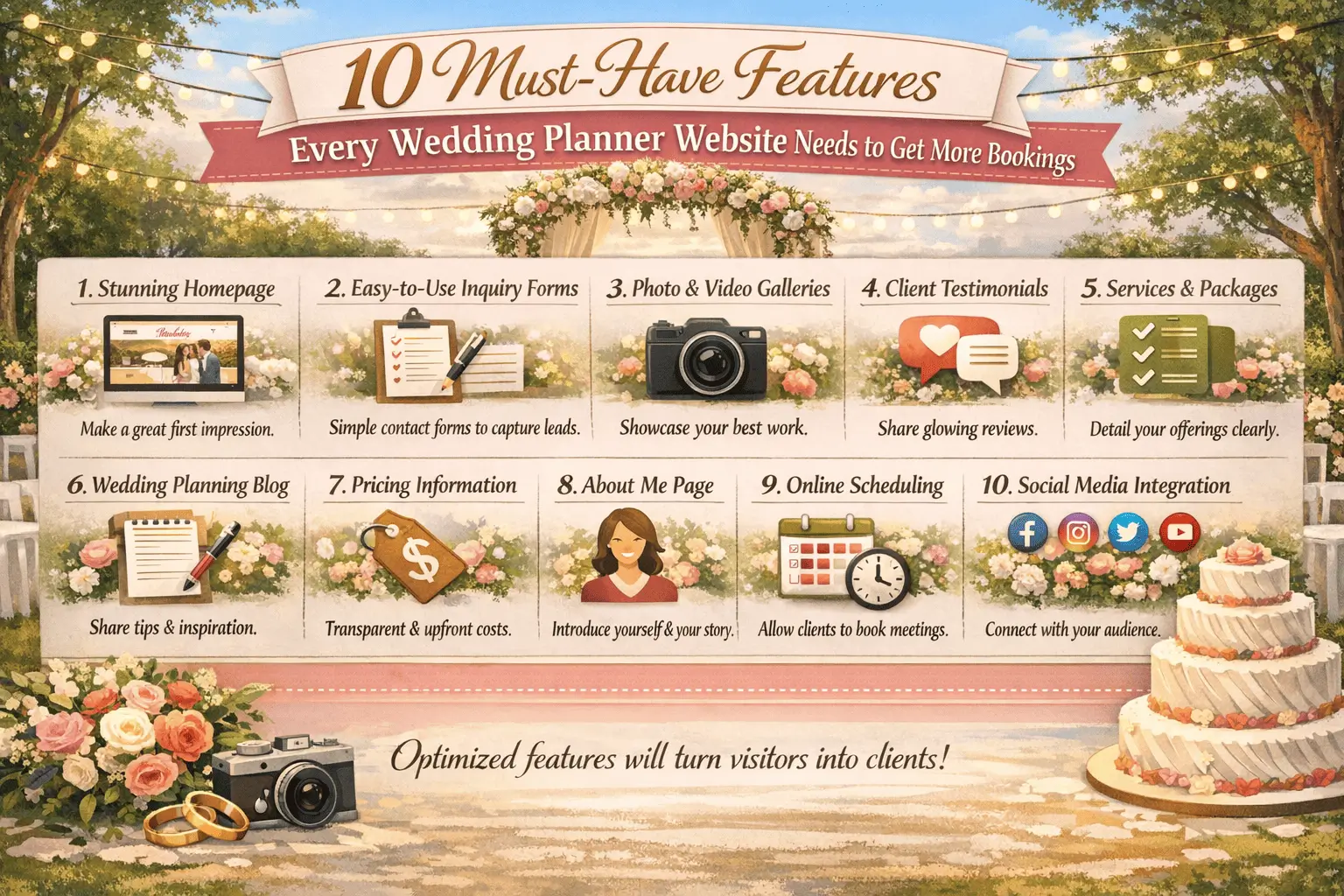
Wedding Planner Website Features play a critical role in converting website visitors into clients. Whether you’re a seasoned wedding planner or just starting, your website is often the first impression you make on potential clients. To maximize bookings and stand out in a competitive industry, it’s essential to have the right features on your wedding planner website. In this blog, we’ll explore the top 10 must-have features that can help you boost client bookings and elevate your wedding planning business. In today’s digital age, a wedding planner’s website is often the first point of contact for potential clients. A strong online presence not only builds credibility but also helps you convert visitors into paying clients. Whether you are a seasoned professional or just starting out in the wedding planning industry, having a website that showcases your skills, services, and expertise is key to success. In this blog, we’ll discuss the 10 must-have features that every wedding planner’s website needs to increase bookings and stand out in a competitive market.
1. Clear and Engaging Homepage
Your homepage is the first impression clients will have of your wedding planning business, so it must be engaging and clear. Your homepage should immediately communicate what you do and why clients should choose you. Use high-quality images of past weddings, a concise and welcoming introduction, and a brief overview of your services.
Key Tips:
Feature a professional, visually appealing design.
Add a compelling headline that highlights your unique selling point.
Incorporate a call-to-action (CTA) that encourages visitors to book a consultation or inquire further.
2. Service Pages with Detailed Information
Potential clients want to know exactly what they’re getting. A wedding planner website should have dedicated service pages outlining each package or service you offer. Be specific about the type of wedding planning services you provide – whether it’s full-service planning, day-of coordination, or destination weddings.
Key Tips:
Include pricing information or provide a way for clients to request a quote.
Highlight popular packages or tailor your services to specific client needs.
Add testimonials or case studies to build trust.
3. User-Friendly Navigation
A well-organized and easy-to-navigate website can make all the difference. Make sure your site’s structure is logical, so potential clients can easily find the information they need. This includes simple menus, well-labeled categories, and an intuitive layout.
Key Tips:
Use sticky navigation bars for easy access to important sections.
Ensure your menu includes sections like Services, Portfolio, Blog, Contact, Testimonials, and FAQs.
Include a search bar to help users find specific content quickly.
4. A Beautiful Portfolio
Your portfolio is the heart of your website and serves as proof of your expertise and creativity. High-quality images from previous weddings you’ve planned will demonstrate your skills and help potential clients visualize their own weddings. Ensure your portfolio includes a variety of styles, from rustic to modern weddings.
Key Tips:
Add images with detailed descriptions of each event.
Categorize your portfolio by wedding style, location, or service package.
Use a gallery-style layout that allows visitors to quickly browse your work.
5. Client Testimonials and Reviews
Social proof is essential for gaining the trust of potential clients. Wedding planning is a personal and significant decision, and couples are likely to choose a planner with proven success and happy clients. Display testimonials prominently on your website to build credibility and trust.
Key Tips:
Feature testimonials from past clients with photos or videos.
Ask for reviews from clients after events and make it easy for them to submit feedback.
Include detailed testimonials that highlight how you solved specific challenges or exceeded expectations.
6. Contact Form and Call to Action
A wedding planner website must include a clear and easy-to-use contact form. Make it simple for potential clients to reach out to you for quotes, consultations, or inquiries. This is a critical element for converting website visitors into leads.
Key Tips:
Include a contact form on every page, preferably in the footer or as a sticky button.
Offer multiple contact methods: phone number, email, and social media links.
Use action-oriented CTAs like “Request a Quote,” “Schedule a Consultation,” or “Get in Touch.”
7. Blog for Wedding Tips and Inspiration
A blog is a great way to showcase your expertise and provide value to potential clients. Write posts about wedding planning tips, real wedding stories, advice on choosing vendors, or trends in the wedding industry. Blogging regularly will also help with SEO by improving your rankings in search engines.
Key Tips:
Include relevant keywords related to wedding planning.
Update your blog frequently with fresh, relevant content.
Share your blog posts on social media to increase engagement.
8. SEO Optimization for Search Engines
SEO is crucial for any Wedding Planner Website Feature. Ensure your site is optimized with the right keywords and high-quality content. This will help your website rank higher in search results and increase visibility.
Use tools like Google Analytics or Rank Math to track your website’s performance and identify areas for improvement.
Your website must be optimized for search engines to ensure it ranks well in Google and other search engines. Proper SEO will increase visibility and drive traffic to your site. Use the right keywords, meta descriptions, and alt text for images to improve your website’s SEO.
Key Tips:
Use keyword research tools to find high-traffic terms related to wedding planning.
Optimize each page with relevant keywords and high-quality content.
Include internal linking between your blog, portfolio, and service pages.
9. Mobile-Responsive Design
In the modern era, many users access websites through mobile devices, so it’s crucial that your website is mobile-friendly. A responsive design ensures your website looks good and functions properly on all devices, including smartphones and tablets.
Key Tips:
Test your website across different devices to ensure it’s responsive.
Use a design that automatically adjusts to different screen sizes.
Prioritize fast load times to avoid losing potential clients due to slow performance.
10. Online Booking System or Consultation Scheduler
Allowing clients to schedule consultations directly on your website is a game-changer. Integrating an online booking system makes it convenient for potential clients to choose their preferred time, which can streamline your business operations and increase bookings.
Key Tips:
Offer a calendar with available slots for clients to select.
Sync the booking system with your Google Calendar or other scheduling tools.
Send automated reminders for appointments and consultations.
Conclusion
Incorporating these 10 must-have features into your wedding planner website can significantly improve your chances of attracting more clients and securing bookings. A well-designed website that is easy to navigate, showcases your portfolio, and provides clear contact options can make all the difference in converting visitors into leads.
Ensure your site is optimized for search engines, responsive on mobile, and offers convenient tools like online booking systems and consultation scheduling. With these features, you’ll not only make a lasting impression on your visitors but also increase the likelihood of turning them into loyal clients.
Start implementing these features today to take your wedding planning business to the next level!