
- Written by: admin
- January 22, 2026
Perplexity AI Explains the SEO → AEO Shift (And Why Search Is Not What It Used to Be)
SEO to AEO Shift explains why AI tools like Perplexity are changing how search works and why traditional SEO alone is no longer enough.
Every few years, someone announces that SEO is dead. Loudly. Usually on Twitter or LinkedIn. And every time, people panic for about a week, then go back to writing blog posts and building links like nothing happened.
But this time, something actually changed.
Perplexity AI recently explained how AI-powered search works under the hood, and once you understand it, you realize this is not just another “algorithm update.” It is a different way of thinking about search altogether. SEO is still alive, yes. But it is no longer the full picture.
If you are still optimizing pages like it is 2018, this might sound confusing at first. Stick with me. I will break it down without the hype.
Traditional Search Was Built Around Pages
Classic SEO is document-based. You create a page. Google indexes the whole thing. Then it decides if that page deserves to rank.
Ten blue links show up. Mostly the same ones for everyone. PageRank, backlinks, authority, and relevance decide who wins. That system worked for a long time, and honestly, it still works in many ways.
The key point is this: traditional search treats a page as a single object. You rank or you do not. You are visible or invisible.
That mental model is baked into how most SEOs think.
AI search does not use that model.
AI Search Does Not Care About Your Page as a Whole
This is where things start to feel weird.
AI search engines, like Perplexity, do not index content only as full documents. They break everything down into extremely small units. Sub-document snippets. Sometimes just a few words long.
Not paragraphs. Not sections. Actual fragments.
So instead of saying, “This article answers the question,” the system says, “This tiny piece of text answers this specific part of the question.”
You might be wondering how that even works at scale. It works because AI search is not trying to rank pages. It is trying to assemble answers.
That difference matters more than it sounds.
How Perplexity Builds an Answer (Without Guessing)
Here is the part that really changes the game.
When someone asks a question, Perplexity does not grab ten pages and summarize them. It pulls in massive amounts of tiny snippets from across its index. Roughly 26,000 snippets are retrieved initially to understand context.
From there, the system filters aggressively and selects around 130,000 tokens worth of the most relevant content. Those tokens fill the AI’s entire context window.
This might sound technical, but the idea is simple.
When the AI’s context window is full of highly relevant source material, there is no room left for randomness. No space to invent things. No need to guess.
That is how hallucinations drop to nearly zero.
The AI is not being “smart” in a human sense. It is being overfed with context. It answers by stitching together verified fragments instead of improvising.
That is a huge shift from how we usually think about AI answers.
Why Search Results Are No Longer Universal
In traditional search, one query usually equals one SERP. Sure, there were small variations, but broadly speaking, everyone saw the same results.
AI search breaks that idea completely.
Because answers are built from snippets, not pages, the system can choose different combinations of content for different users. Context matters. Intent matters. Sometimes even previous queries matter.
Two people can ask the same question and get different answers. Both can be accurate. They are just assembled differently.
This is why tracking “rankings” starts to feel pointless in AI search. There is no single position one. There is no stable SERP to monitor.
If that makes you uncomfortable, you are not alone. It messes with years of SEO habits.
But it also opens new doors.
SEO Still Matters (Just Not the Way You Think)
Here is the mistake a lot of people make. They hear all this and assume SEO is useless now.
It is not.
SEO fundamentals still decide whether your content even enters the system. Indexing still matters. Crawlability still matters. PageRank still matters.
Think of SEO as the gatekeeper. If you do not meet the baseline, your content never becomes a snippet candidate in the first place.
So technical SEO, internal linking, backlinks, and site authority still do their job. They just do not finish the job anymore.
Ranking a page is no longer the end goal. It is just step one.
From SEO to AEO: What Actually Changes
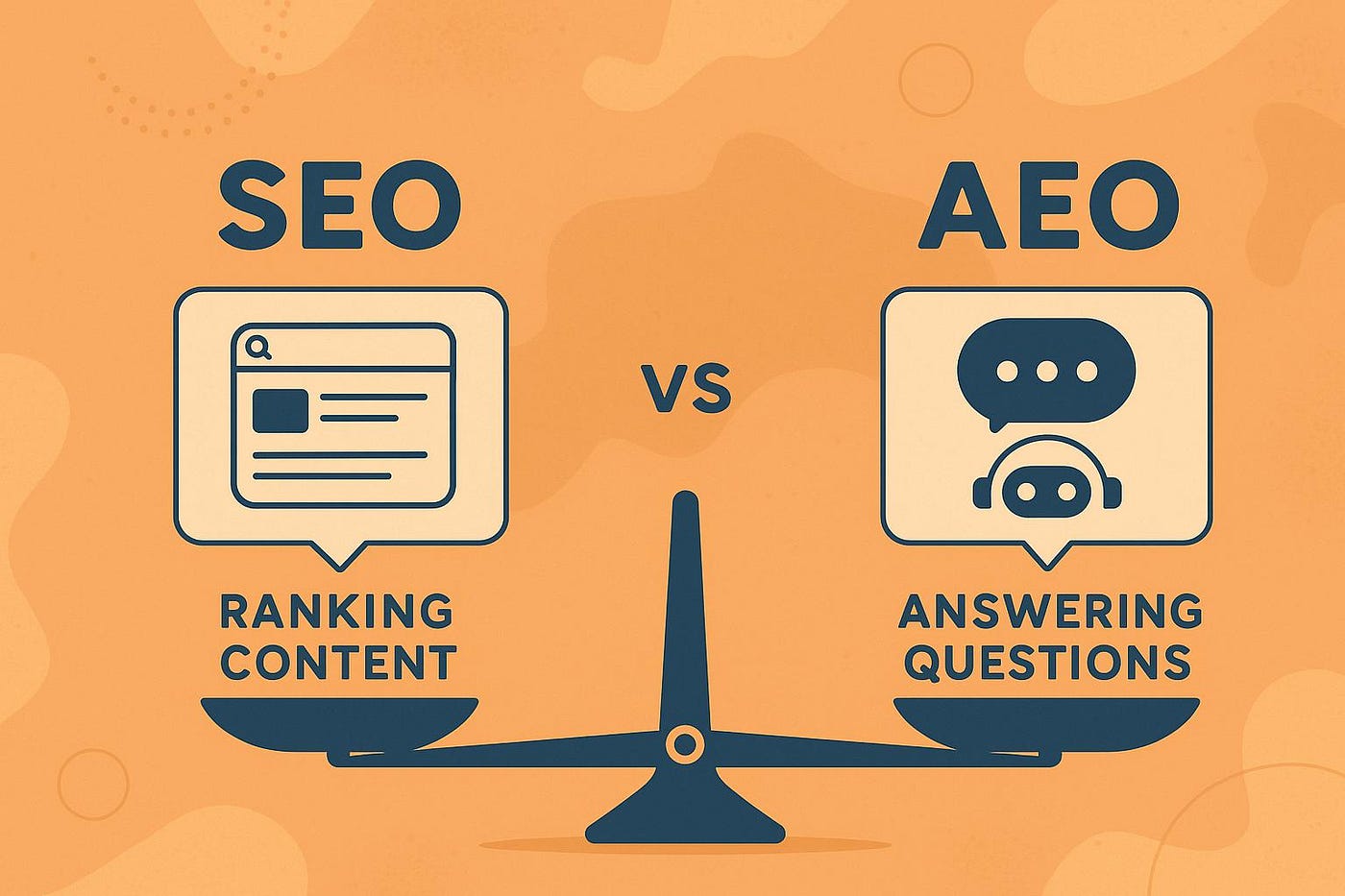
This is where Answer Engine Optimization, or AEO, comes in.
Instead of asking, “How do I rank this page?” you start asking, “How do I make this content easy to extract answers from?”
That sounds subtle, but it changes how you write.
Content needs to be granular. Clear sections. Obvious explanations. Short paragraphs that answer one thing at a time. Language that does not hide the point.
A single paragraph should make sense on its own. A single sentence should be quotable without needing extra context.
This is not about dumbing things down. It is about clarity.
Why Topical Authority Becomes Even More Important
In AI search, one page is not enough.
The system pulls snippets from across a topic, not just one URL. The more relevant content you have around a subject, the more snippets you can contribute to answers.
That is what topical authority really means in an AI-driven world. Not just one “pillar page,” but broad, consistent coverage.
More coverage equals more snippet saturation. More saturation equals higher chances of being included in AI-generated answers.
This is also why thin content strategies collapse. You cannot fake depth at the snippet level.
Conversational Queries Are the New Normal
Another big change is how people search.
Traditional SEO loved short keywords. Two or three words. “Best laptops 2024.” “SEO tools.”
AI search thrives on full questions. Ten or eleven words is common now. People type like they talk.
“If I am a beginner, how do I learn SEO for AI search?”
If your content sounds like it was written for real questions from real people, you are already aligned with how AI search works.
If it sounds like it was written to impress an algorithm, it probably will not survive snippet extraction.
The End of the Universal SERP
Here is the part that feels uncomfortable but honest.
The idea of one universal search result page is fading. Same query, different answers is the new normal.
AI search personalizes at the context level, not just the ranking level. Sub-document processing plus personal signals means no two answers have to be identical.
For SEOs, this means control is lower. But relevance is higher.
You are no longer competing to be number one. You are competing to be useful enough to be included.
Perplexity’s Hidden Advantage
Perplexity also mentioned something important. They use proprietary technology between indexing and snippet selection. That layer decides which fragments are relevant and which are ignored.
You cannot reverse-engineer that with old SEO tricks. You cannot stuff keywords into it. You cannot manipulate it easily.
The only real strategy is to explain things well.
Clear explanations. Honest language. Direct answers.
To be honest, this feels like a return to basics. SEO always claimed to reward good content. AI search actually enforces it.
What This Means Going Forward
The mental shift is the hardest part.
Stop thinking in pages. Start thinking in answers. Stop chasing rankings. Start building clarity.
SEO gets you indexed. AEO gets you quoted.
If you can accept that, you are already ahead of most people still arguing about whether SEO is “dead.”
It is not dead. It just grew up.