- Written by: admin
- March 9, 2026
Introduction
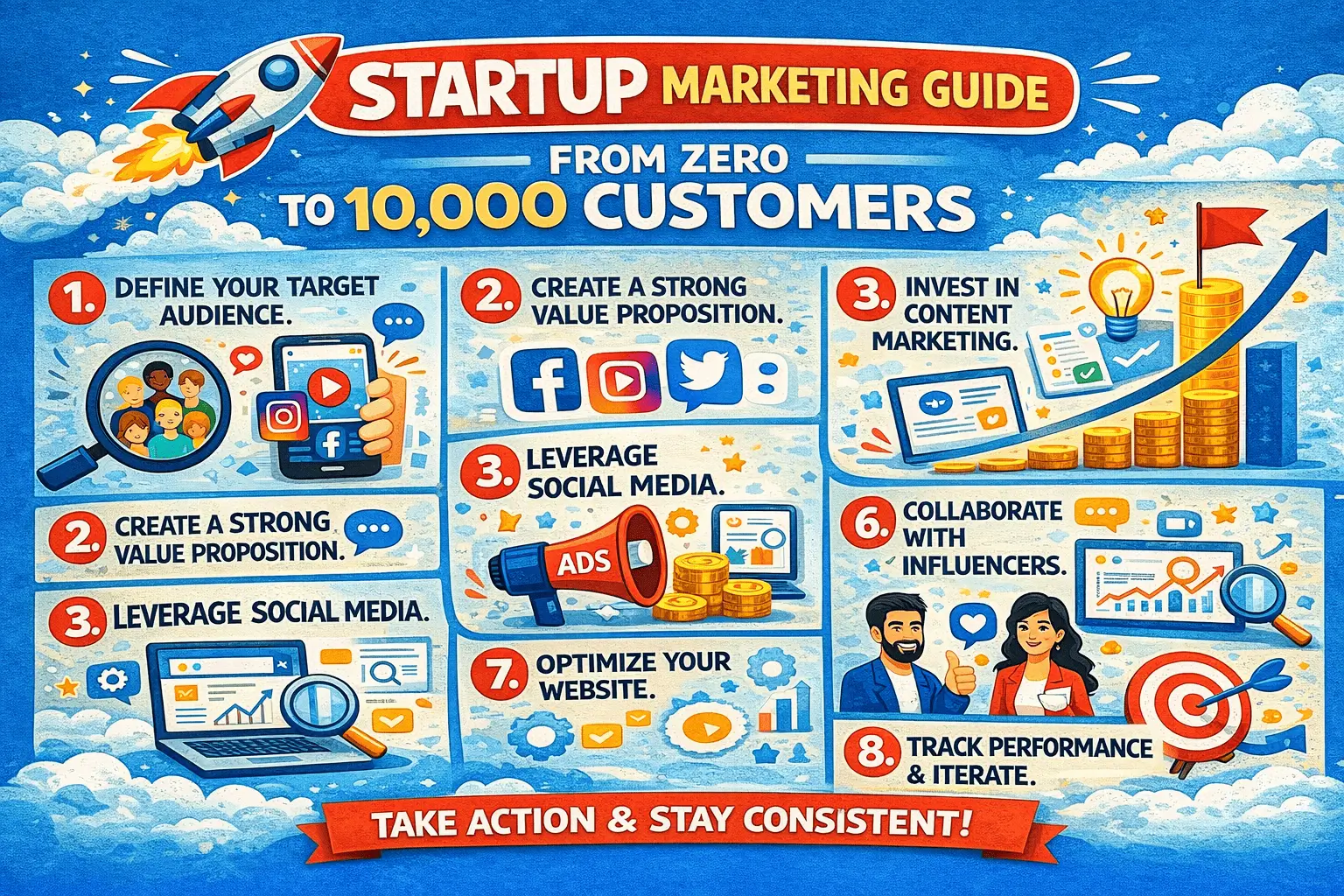
startup marketing guide Launching a startup is exciting, but attracting your first customers can be one of the most difficult challenges. Many startups fail not because their product is bad, but because they struggle with marketing and customer acquisition.
A strong startup marketing guide helps founders move from an unknown brand to a trusted business with thousands of customers. The goal is not just to generate traffic but to build sustainable growth that converts visitors into loyal customers.
In this guide by Beta Digital Marketing, we will explore practical marketing strategies that startups can use to grow from zero customers to 10,000 customers efficiently. These strategies combine digital marketing, growth marketing, data-driven decisions, and scalable customer acquisition techniques.
Step 1: Identify Your Ideal Customer
Before running any marketing campaigns, startups must clearly define their target audience. Marketing without understanding the audience leads to wasted resources.
Start by answering these questions:
• Who is your ideal customer?
• What problems are they facing?
• What solution does your product provide?
• Where do they spend time online?
Create buyer personas that include demographics, interests, behaviors, and challenges.
For example, a SaaS startup targeting project managers might focus on professionals aged 25–40 who work in remote teams and need productivity tools.
Understanding your audience helps you create marketing messages that resonate with potential customers.
Step 2: Build a Strong Brand Identity
Understanding your target audience is crucial for effective social media marketing.
Audience research strategies:
Analyze demographics: age, gender, location, profession
Study interests and behavior: social platforms, content preferences, engagement habits
Create buyer personas: detailed profiles representing your ideal customer
Example: A fitness startup targets millennials who actively follow health and wellness content on Instagram. Tailoring content to their interests increases engagement and conversions.
Tip: Use analytics tools like Facebook Insights, Instagram Analytics, and LinkedIn Analytics to understand audience behavior.
Step 3: Create a High-Converting Website
Your website is the foundation of digital marketing. Every marketing campaign eventually leads users to your website.
A startup website should include:
• Clear headline explaining your product
• Strong call-to-action (CTA)
• Simple navigation
• Fast loading speed
• Mobile optimization
• Customer testimonials or social proof
Landing pages should focus on a single objective such as sign-ups, demo bookings, or purchases.
A well-optimized website significantly improves conversion rates.
Step 4: Use Content Marketing to Attract Traffic
Content marketing is one of the most effective ways for startups to attract organic traffic.
By publishing helpful content, startups can educate potential customers and build authority in their industry.
Content marketing formats include:
• Blog articles
• Tutorials and guides
• Case studies
• Videos and webinars
• Infographics
SEO-optimized blog posts allow startups to rank on search engines and attract long-term traffic without continuous advertising costs.
For example, a fintech startup could create articles about budgeting tips or financial planning strategies.
Over time, these articles attract users searching for related solutions.
Step 5: Leverage Social Media Marketing
Social media platforms provide startups with a powerful way to reach large audiences quickly.
Different platforms serve different purposes:
LinkedIn
Best for B2B startups and professional services.
Instagram
Ideal for lifestyle brands, e-commerce, and visual products.
Twitter/X
Useful for industry conversations and real-time engagement.
TikTok
Great for viral content and younger audiences.
Social media strategies include:
• Educational posts
• Behind-the-scenes content
• Customer success stories
• Short-form videos
• Interactive polls and questions
Consistency is key to building a strong social media presence.
Step 6: Implement Email Marketing
Email marketing remains one of the highest ROI marketing channels.
Startups should build an email list from the beginning. Email allows direct communication with potential customers and helps nurture leads until they are ready to buy.
Ways to collect emails include:
• Free guides or ebooks
• Webinar registrations
• Newsletter sign-ups
• Free product trials
Email campaigns can include:
• Welcome sequences
• Educational newsletters
• Product updates
• Special offers
Personalized emails often achieve significantly higher engagement and conversion rates.
Step 7: Use Paid Advertising for Faster Growth
While organic marketing takes time, paid advertising helps startups grow faster.
Popular advertising platforms include:
Google Ads
Targets users searching for specific solutions.
Facebook and Instagram Ads
Great for interest-based targeting and retargeting.
LinkedIn Ads
Ideal for B2B lead generation.
Startups should begin with small budgets and test different ads, targeting options, and creatives.
Once a campaign performs well, it can be scaled to acquire more customers.
Step 8: Implement Growth Marketing Experiments
Growth marketing focuses on continuous testing and optimization.
Instead of relying on one strategy, startups run multiple experiments to identify what works best.
Examples of growth experiments include:
• Testing different landing page headlines
• Trying new ad creatives
• Experimenting with pricing models
• Offering limited-time promotions
Data collected from these experiments helps startups optimize their marketing strategies.
Step 9: Build Referral Programs
Referral marketing is one of the most powerful growth strategies.
When customers recommend your product to others, it creates trust and reduces acquisition costs.
Referral programs offer incentives for sharing your product.
Examples of referral incentives:
• Discounts
• Free features
• Account credits
• Exclusive access
One of the most famous examples is Dropbox, which offered extra storage space for referrals.
This strategy helped Dropbox grow rapidly during its early stages.
Step 10: Retarget Interested Users
Not all visitors convert on their first visit.
Retargeting campaigns allow startups to reach users who have already interacted with their website or content.
Retargeting methods include:
• Display ads
• Social media ads
• Email reminders
For example, an e-commerce startup can show ads to users who abandoned their shopping cart.
This significantly increases conversion rates.
Step 11: Track Marketing Performance
Marketing without analytics is like driving without a map.
Startups must track performance metrics to understand which strategies are working.
Important marketing metrics include:
• Website traffic
• Conversion rates
• Cost per acquisition (CPA)
• Customer lifetime value (LTV)
• Return on ad spend (ROAS)
Tools that help track performance include:
Google Analytics
HubSpot
Mixpanel
Hotjar
Data-driven decisions help startups improve marketing results continuously.
Step 12: Focus on Customer Retention
Acquiring customers is important, but retaining them is equally critical.
Returning customers often generate more revenue than new customers.
Customer retention strategies include:
• Loyalty programs
• Personalized communication
• Excellent customer support
• Regular product updates
Satisfied customers also become brand advocates who promote your product organically.
Scaling From 1,000 to 10,000 Customers
Once your startup reaches early traction, the focus shifts to scaling.
Key scaling strategies include:
• Expanding marketing channels
• Increasing advertising budgets on successful campaigns
• Creating partnerships with complementary businesses
• Automating marketing processes
• Entering new markets
Scaling should always be based on data and proven strategies.
The Future of Startup Marketing
Startup marketing continues to evolve rapidly.
Emerging trends include:
Artificial intelligence marketing
Predictive analytics
Personalized customer experiences
Automation tools
Voice search optimization
Startups that adopt these technologies early gain a competitive advantage.
Conclusion
Growing from zero to 10,000 customers requires a structured marketing approach.
By combining branding, SEO, content marketing, social media, paid advertising, referral programs, and data analytics, startups can build a powerful growth engine.
This startup marketing guide provides the foundation for sustainable customer acquisition and scalable growth.
At Beta Digital Marketing, we help startups design marketing strategies that attract customers, increase conversions, and accelerate business growth.
Start implementing these strategies today, experiment continuously, and watch your startup grow from zero customers to thousands of loyal users.