- Written by: admin
- March 9, 2026
Introduction
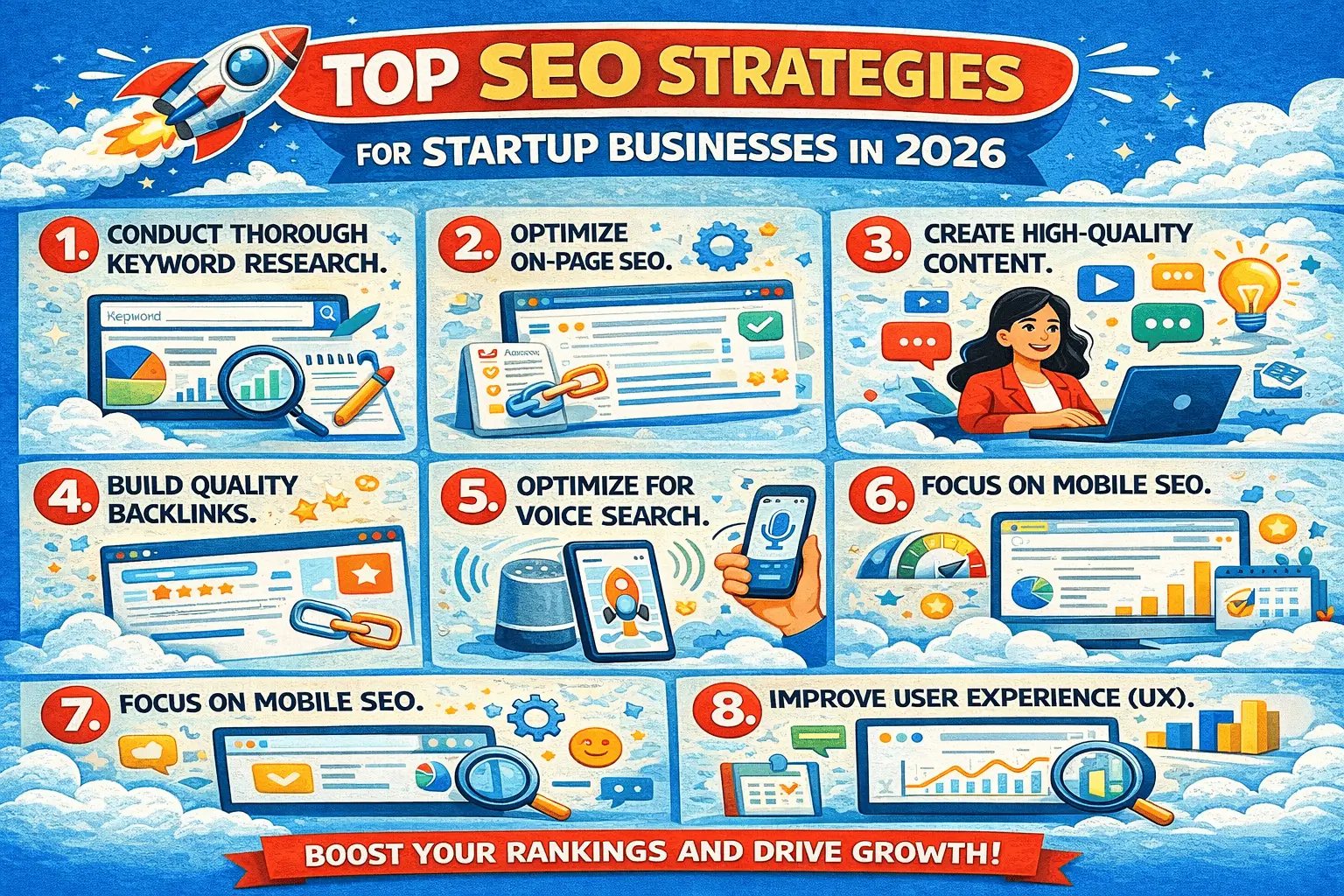
SEO strategies for startups Search engine optimization (SEO) is one of the most cost-effective marketing channels for startups. In 2026, SEO is evolving rapidly with AI-powered tools, voice search, and user experience optimization taking center stage. For startups, leveraging SEO effectively can mean the difference between being discovered by thousands of potential customers or being lost in the crowd.
This article provides a comprehensive guide to top SEO strategies for startup businesses in 2026, helping founders understand the latest tactics, tools, and actionable steps to improve organic visibility and scale their businesses efficiently.
1. Understand the SEO Landscape in 2026
SEO is no longer just about keywords and backlinks. Search engines like Google now focus on:
User Intent: Understanding what the user truly wants
Content Quality: High-value, engaging, and informative content
AI Integration: Tools that predict trends and optimize content automatically
Experience Optimization: Mobile usability, speed, and structured data
Startups must embrace data-driven SEO strategies and continuously adapt to these evolving factors.
2. Conduct Comprehensive Keyword Research
Keyword research remains the foundation of SEO. Startups should focus on high-intent keywords that potential customers are actively searching for.
Tips for 2026 keyword research:
Use AI-powered tools like Ahrefs, SEMrush, and ChatGPT to discover trends
Focus on long-tail keywords to capture niche audiences
Analyze competitors’ keywords to identify opportunities
Consider voice search queries with natural language
Example: A SaaS startup can target “best project management tools for remote teams” instead of just “project management software” to attract qualified leads.
3. Build High-Quality, Value-Driven Content
Content continues to be king in SEO. For startups, creating content that solves problems and answers user questions is essential.
Content strategies for startups in 2026:
Write long-form, authoritative articles (1500–3000 words)
Include actionable tips, examples, and case studies
Use AI tools to enhance research and generate content efficiently
Create interactive content like calculators, quizzes, and infographics
Example: A fintech startup creates a detailed guide on “How Small Businesses Can Save Taxes Legally,” attracting high-intent traffic and email subscribers.
4. Optimize On-Page SEO
On-page SEO ensures your content is easily understood by search engines and users.
Essential on-page SEO practices:
Include focus keyword in the title, URL, headings, and meta description
Optimize image alt texts and filenames
Use internal linking to guide users and distribute link equity
Enhance readability with short paragraphs, bullet points, and subheadings
Example: An e-commerce startup ensures product pages include target keywords in the title, description, and meta tags to rank for high-intent searches.
5. Improve Website UX and Core Web Vitals
User experience (UX) and page speed are critical ranking factors. Google’s Core Web Vitals emphasize loading speed, interactivity, and visual stability.
Tips for startups:
Optimize images and videos for faster loading
Minimize scripts and unnecessary plugins
Ensure responsive design for mobile users
Implement clear navigation for easy user flow
Example: A SaaS startup redesigned its website with faster loading pages, resulting in a 25% decrease in bounce rate and higher search rankings.
6. Leverage AI and Automation for SEO
AI tools are transforming SEO by analyzing data, optimizing content, and predicting trends. Startups can scale efforts without large teams.
AI-driven SEO applications:
Generate keyword-rich content ideas
Automate meta descriptions and title tags
Predict traffic trends and identify gaps
Analyze competitors’ SEO strategies
Example: Using AI-powered tools, a marketing startup identifies trending keywords in their niche and creates content optimized to rank before competitors.
7. Build Quality Backlinks
Backlinks remain a major ranking factor. Startups need to focus on quality over quantity.
Link-building strategies:
Guest posting on industry-relevant sites
Collaborate with influencers and partners
Create shareable content like infographics and research reports
Outreach campaigns to acquire high-authority backlinks
Example: A tech startup publishes a report on AI adoption in small businesses, earning backlinks from industry blogs and news sites, boosting domain authority.
8. Optimize for Voice and Mobile Search
Voice search is growing with smart assistants like Google Assistant, Siri, and Alexa. Mobile-first indexing ensures mobile optimization is crucial.
Strategies for voice and mobile SEO:
Use conversational, long-tail keywords
Optimize FAQ pages for voice queries
Ensure responsive and mobile-friendly design
Use structured data (schema markup) for rich snippets
Example: A local restaurant startup optimized its site with structured data and FAQs like “best vegan food near me,” increasing mobile and voice search visibility.
9. Use Video SEO
Video content is increasingly important for engagement and search rankings. Platforms like YouTube also act as search engines.
Video SEO tips:
Include target keywords in video titles, descriptions, and tags
Create transcripts and captions for accessibility and indexing
Embed videos on your website to increase dwell time
Optimize thumbnails to improve CTR
Example: A fitness startup uploads workout tutorials on YouTube and embeds them on their blog, increasing organic traffic and engagement.
10. Focus on Local SEO
For startups targeting specific regions, local SEO drives high-intent leads.
Local SEO strategies:
Create and optimize Google Business Profile
Include location-based keywords
Encourage customer reviews
Use local backlinks and citations
Example: A startup co-working space targets “affordable coworking space in Chennai” and ranks in local search results, driving walk-in leads.
11. Implement Analytics and Track SEO KPIs
Measuring results ensures your efforts are effective. Track key SEO KPIs to refine strategy.
Important metrics for startups:
Organic traffic
Keyword rankings
Click-through rate (CTR)
Bounce rate and dwell time
Conversion rate from organic traffic
Tools: Google Analytics, Search Console, Ahrefs, SEMrush
Example: A SaaS startup monitors organic traffic and keyword positions monthly, optimizing underperforming content to improve rankings.
12. Use Content Clusters and Topic Authority
Creating content clusters around main topics improves search rankings and authority.
How it works:
Create a pillar page covering a broad topic
Create supporting content linking to the pillar page
Use internal linking to distribute authority
Example: A marketing startup creates a pillar page on “Social Media Marketing” and links supporting blogs like “Instagram Ads Tips” and “LinkedIn Lead Generation,” increasing rankings for multiple keywords.
13. Embrace Emerging SEO Trends for 2026
Startups need to stay ahead by adopting upcoming trends:
AI-powered content optimization
Predictive search and intent analysis
Enhanced mobile-first indexing
Voice and video search integration
Schema and structured data for rich snippets
Tip: Experiment with new trends while focusing on proven SEO fundamentals for sustainable growth.
Conclusion
SEO strategies for startups in 2026 require a combination of technical optimization, high-quality content, AI-powered tools, and user experience improvements. By focusing on keyword research, on-page SEO, backlinks, local SEO, mobile optimization, and analytics, startups can drive organic traffic, generate leads, and scale efficiently from zero to thousands of customers.
At Beta Digital Marketing, we help startups implement these SEO strategies to maximize visibility, attract high-quality traffic, and achieve sustainable growth. Start implementing these strategies today and position your startup for success in 2026 and beyond.