- Written by: admin
- March 9, 2026
Introduction
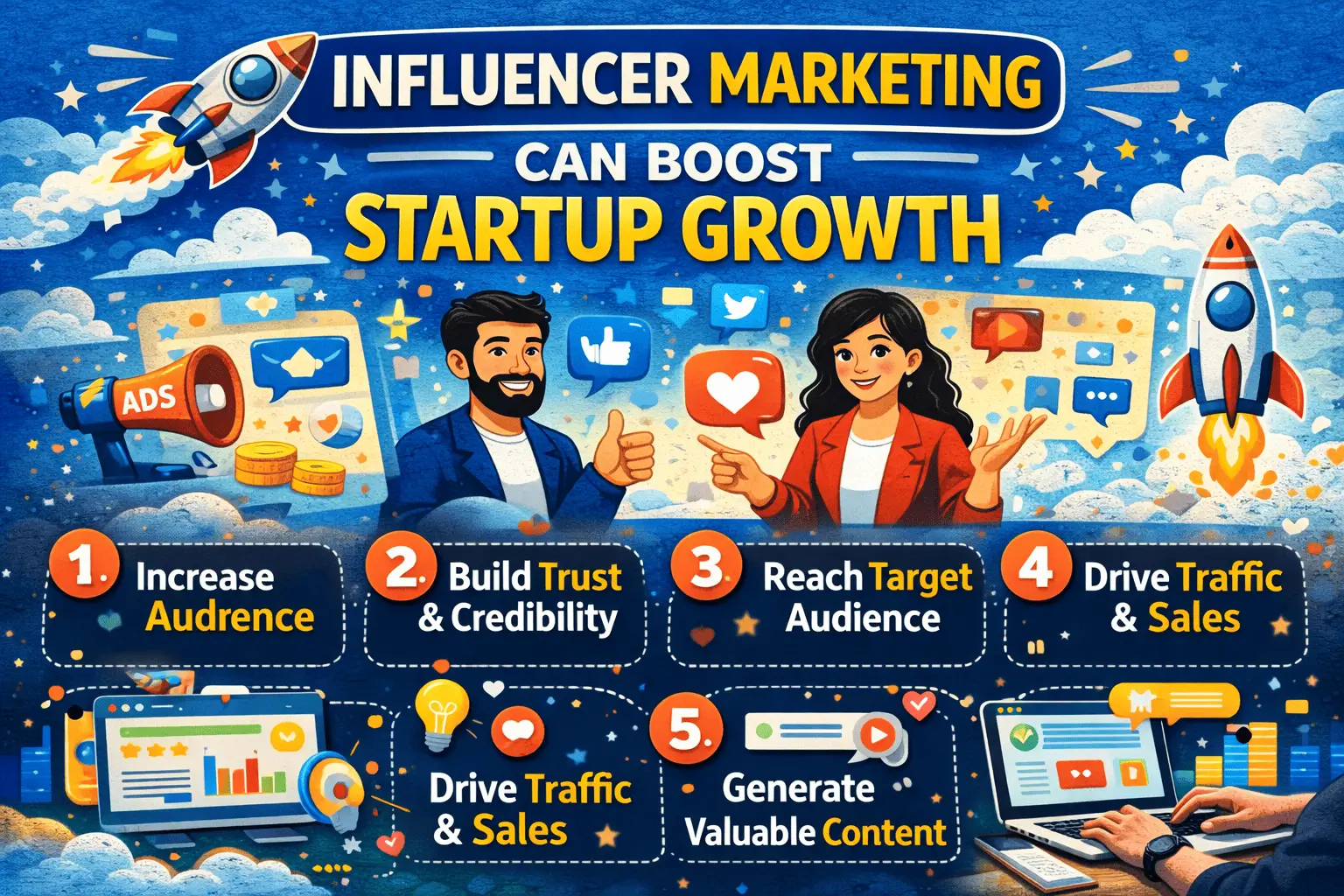
influencer marketing for startups Startups face significant challenges when it comes to growth. Limited budgets, small teams, and high competition make customer acquisition a major hurdle. Influencer marketing offers a cost-effective, high-impact strategy to overcome these challenges.
By collaborating with the right influencers, startups can quickly reach targeted audiences, build trust, and increase conversions. Unlike traditional marketing channels, influencer marketing leverages social proof and authenticity, which resonates strongly with modern consumers.
This guide will explore how influencer marketing can boost startup growth, providing actionable strategies, real-world examples, and tips for implementing successful campaigns.
1. Understanding Influencer Marketing for Startups
Influencer marketing involves partnering with individuals who have influence over your target audience to promote your product, service, or brand.
Why it works for startups:
Builds trust quickly through social proof
Accesses pre-engaged audiences
Amplifies brand visibility with minimal budget
Drives conversions and leads effectively
Example: A new skincare startup partners with micro-influencers on Instagram. Their product demonstration posts generate thousands of impressions, resulting in a surge of website traffic and early sales.
Startups don’t need mega-celebrities; micro and nano influencers often provide higher engagement and are cost-effective.
2. Identify Your Target Audience
Before partnering with influencers, startups must clearly define their target audience.
Steps to identify your audience:
Demographics: age, gender, location, profession
Interests: hobbies, lifestyle, content preferences
Pain points: what problems are they trying to solve
Platforms: which social media channels they frequent
Example: A fintech startup targeting small business owners may focus on LinkedIn influencers who discuss finance, business growth, and productivity.
Knowing your audience ensures you select influencers whose followers align with your customer base.
3. Choose the Right Type of Influencer
Not all influencers are suitable for startups. There are different categories:
Nano Influencers (1k–10k followers): Highly engaged niche audiences, affordable
Micro Influencers (10k–50k followers): Targeted audience, higher engagement than macro influencers
Macro Influencers (50k–500k followers): Larger reach, higher cost
Celebrity Influencers (500k+ followers): Mass reach, very high cost
Tip: Startups often get the best ROI with micro or nano influencers because they are cost-effective and have a more loyal, engaged audience.
4. Define Campaign Goals and KPIs
To measure success, startups must define clear goals for influencer campaigns.
Possible goals:
Brand awareness: impressions, reach, social mentions
Lead generation: sign-ups, downloads, inquiries
Sales: purchases directly from influencer campaigns
Community building: engagement, followers, user-generated content
KPIs to track:
Engagement rate (likes, comments, shares)
Click-through rate (CTR)
Conversions and sales
ROI of influencer campaigns
Example: A new SaaS startup partners with LinkedIn influencers to drive free trial sign-ups, tracking CTR from each influencer’s unique link.
5. Build Authentic Partnerships
Authenticity is key to influencer marketing success. Audiences can easily spot inauthentic promotions.
Tips for authentic partnerships:
Choose influencers whose content aligns with your brand
Allow influencers creative freedom to communicate your message
Collaborate on content ideas together
Focus on long-term relationships rather than one-off promotions
Example: A fitness startup partners with a health influencer to co-create a workout routine video, integrating their product naturally, which resonates more than a generic ad.
6. Create Engaging and Shareable Content
Content is the core of influencer marketing. The goal is to create content that engages, educates, and encourages sharing.
Content formats that work for startups:
Instagram Reels or TikTok videos
Stories with swipe-up links
YouTube product reviews or tutorials
Blog features and interviews
Podcasts or live streams
Tip: Use storytelling in campaigns to connect emotionally with audiences, increasing the likelihood of shares.
Example: A food startup collaborates with a TikTok influencer to create a “Quick Recipes Using Our Product” video, which goes viral and drives orders.
7. Leverage Micro-Influencers for Niche Targeting
Micro-influencers are ideal for startups because they provide:
High engagement rates
Targeted audience niches
Cost-effective campaigns
Credibility and trust
Example: A sustainable fashion startup partners with 10 micro-influencers, each with 20k followers in eco-conscious niches, generating thousands of website visits and email sign-ups.
8. Run Giveaways and Contests
Giveaways and contests amplify reach and encourage user-generated content (UGC).
Tips for effective giveaways:
Require participants to follow your brand and the influencer
Encourage tagging friends or sharing content
Offer relevant and desirable prizes
Use UGC as social proof for future campaigns
Example: A tech startup runs a “Tag 3 friends to win our new gadget” campaign via influencer posts, generating viral reach and increasing email subscribers.
9. Track Campaign Performance and Optimize
Measurement is essential to improve ROI and scale campaigns.
Metrics to monitor:
Engagement rate (likes, shares, comments)
Website traffic from influencer links
Conversions and sales
Brand mentions and reach
Tools: Google Analytics, UTM tracking links, social analytics dashboards
Example: A SaaS startup tracks free trial sign-ups from each influencer link, identifying the top performers and scaling campaigns with them.
10. Repurpose Influencer Content
Repurposing influencer content maximizes ROI and extends reach.
Repurposing strategies:
Share video snippets on your brand channels
Create blog posts or case studies from influencer collaborations
Use testimonials for social media ads
Turn posts into email marketing content
Example: A skincare startup reuses influencer TikTok reviews in Instagram ads, improving ad performance and conversions.
11. Combine Influencer Marketing with Paid Advertising
Influencer campaigns can be amplified with paid social ads to reach larger audiences.
Strategies:
Boost high-performing influencer posts as ads
Use retargeting campaigns to capture engaged users
Integrate UGC into ad creatives
Example: A fitness startup promotes influencer workout videos as sponsored Instagram ads, increasing sign-ups for their online program.
12. Focus on Long-Term Relationships
Long-term partnerships with influencers build credibility and sustained growth.
Benefits:
Consistent brand messaging
Higher trust among audiences
Easier collaborations and better campaign planning
Example: A D2C startup partners with one micro-influencer for monthly campaigns, building a loyal community of repeat customers.
13. Avoid Common Influencer Marketing Mistakes
Startups often make mistakes that reduce ROI:
Choosing influencers based solely on follower count
Ignoring audience engagement and authenticity
Not setting clear goals or KPIs
Failing to track and optimize campaigns
Overloading influencers with rigid scripts
Avoid these mistakes to maximize the impact of your campaigns.
14. Emerging Trends in Influencer Marketing for 2026
Influencer marketing continues to evolve. Key trends for startups in 2026:
AI-powered influencer discovery tools
Short-form video content domination (TikTok, Instagram Reels)
Micro and nano influencers becoming the norm for niche audiences
Live shopping and livestream campaigns
Data-driven ROI tracking and predictive campaign performance
Startups leveraging these trends early gain a competitive edge.
15. Experiment and Iterate
Virality often comes from experimentation. Test different formats, headlines, and platforms to see what resonates.
Experimentation tips:
Run small-scale tests before scaling
Track performance and iterate based on data
Learn from both successful and failed campaigns
Example: A startup testing humorous TikTok videos notices a particular format generates more shares. They then create a series, amplifying reach further.
Conclusion
Influencer marketing for startups is a powerful tool to accelerate growth, build brand awareness, and generate leads quickly. By selecting the right influencers, creating authentic content, running engaging campaigns, and tracking results, startups can reach their target audience effectively and scale faster than traditional marketing alone.
At Beta Digital Marketing, we help startups implement influencer marketing strategies that deliver measurable results. From identifying the right influencers to executing viral campaigns, our approach ensures startups grow efficiently and sustainably.
Start building your influencer strategy today and watch your startup reach new audiences, increase engagement, and drive meaningful growth.