 hello@betadigitalmarketing.com
 +91 9513999901
- Written by: admin
- March 7, 2026
Introduction
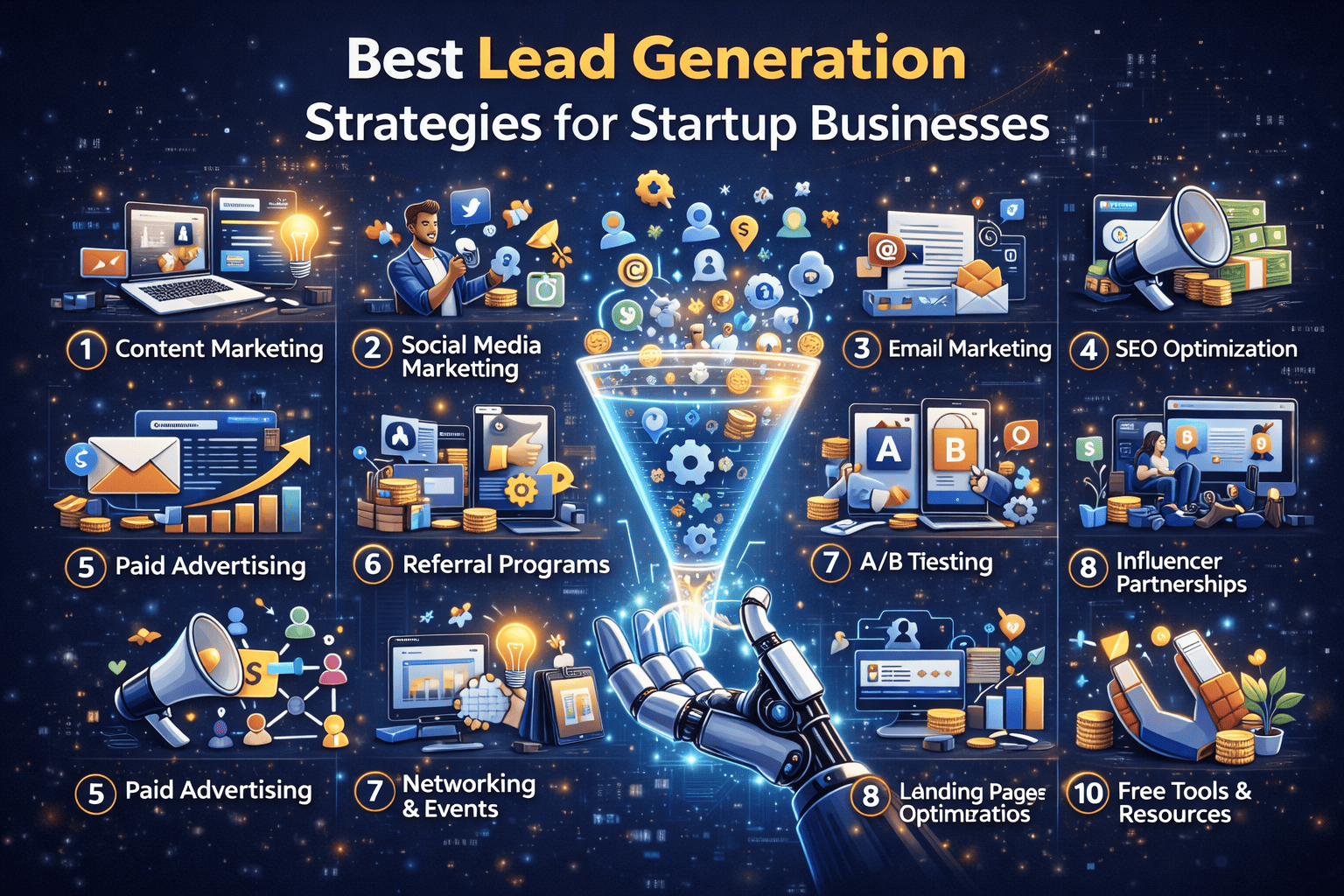
lead generation strategies for startups For startups, generating quality leads is one of the most critical challenges. With limited resources, small teams, and tight budgets, finding strategies that deliver measurable results is essential. Lead generation is more than just collecting email addresses—it’s about attracting the right audience, nurturing them, and converting them into loyal customers.
This guide will explore the best lead generation strategies for startup businesses, covering everything from content marketing and social media to automation, partnerships, and advanced techniques. Implementing these strategies will help your startup attract high-quality leads and accelerate growth efficiently.
1. Define Your Target Audience and Buyer Personas
Before implementing any lead generation strategy, startups must understand who their ideal customers are. Creating detailed buyer personas helps you tailor campaigns and messaging for maximum impact.
Steps to create effective buyer personas:
Identify demographics: age, location, gender, profession
Analyze behavior: purchasing habits, online activity, pain points
Understand goals and challenges: what solutions they seek
Example: A SaaS startup targeting project managers may focus on pain points like task management, team collaboration, and time tracking. Content and campaigns should address these specific challenges.
Benefit: Well-defined personas ensure marketing efforts attract leads most likely to convert.
2. Content Marketing for Lead Generation
Content marketing is one of the most effective strategies for startups. It helps educate your audience, establish authority, and attract leads organically.
Effective content strategies:
Blogging: Create high-value posts that solve customer problems. Use SEO keywords to attract organic traffic.
E-books & Guides: Offer downloadable resources in exchange for contact information.
Webinars & Tutorials: Live or recorded sessions build trust and generate qualified leads.
Videos & Infographics: Visual content increases engagement and shares across platforms.
Example: A startup offering digital marketing software could create a free e-book: “10 Proven Strategies to Increase Social Media Engagement”, capturing leads through gated content.
Benefit: Content marketing nurtures leads while demonstrating your startup’s expertise.
3. Optimize Your Website for Lead Capture
Your website is the primary hub for lead generation. Optimizing it ensures visitors convert into leads efficiently.
Website lead generation tactics:
Clear CTAs: Place call-to-action buttons in prominent areas.
Gated Content: Offer free resources (guides, templates, webinars) in exchange for email addresses.
Landing Pages: Dedicated pages for campaigns, products, or services with persuasive messaging.
Live Chat & Chatbots: Engage visitors in real-time, answer questions, and capture leads.
Example: A SaaS startup can create a landing page for a free trial offer with a simple form and live chat assistance, increasing conversions significantly.
Benefit: An optimized website transforms traffic into high-quality leads consistently.
4. Social Media Lead Generation
Social media is a cost-effective channel for startups to reach their audience and generate leads. Platforms like Facebook, LinkedIn, Instagram, and TikTok allow precise targeting.
Social media lead generation strategies:
Lead Ads: Platforms like Facebook and LinkedIn allow users to submit forms without leaving the platform.
Engaging Content: Share tips, success stories, or tutorials to attract followers and drive leads.
Groups & Communities: Create niche groups to interact with potential customers and build trust.
Influencer Collaborations: Partner with micro-influencers to reach a highly targeted audience.
Example: A B2B startup can use LinkedIn lead generation forms targeting decision-makers in specific industries.
Benefit: Social media campaigns increase brand awareness while capturing high-quality leads.
5. Email Marketing for Lead Nurturing
Email marketing is one of the highest ROI channels for startups. Beyond generating leads, it nurtures them until they’re ready to purchase.
Email strategies for startups:
Welcome Series: Automate a sequence to introduce your brand and services.
Personalized Emails: Segment leads based on behavior and preferences.
Promotional Campaigns: Offer free trials, discounts, or exclusive content.
Re-engagement Emails: Reconnect with inactive subscribers.
Example: A SaaS startup can send personalized onboarding emails guiding new users through features, increasing trial-to-paid conversions.
Benefit: Email marketing keeps leads engaged and drives consistent conversions.
6. Paid Advertising & PPC Campaigns
Paid advertising allows startups to generate leads quickly by targeting specific audiences with high purchase intent.
PPC lead generation strategies:
Google Ads: Bid on high-intent keywords to attract users searching for solutions.
Facebook/Instagram Ads: Retarget website visitors or engage lookalike audiences.
LinkedIn Ads: Ideal for B2B startups targeting decision-makers.
A/B Testing: Test ad creatives, copy, and targeting for maximum ROI.
Example: A fintech startup can run Google Ads targeting keywords like “best budgeting app for startups”, converting visitors into app sign-ups.
Benefit: Paid ads provide measurable results and can be scaled based on performance.
7. Leverage SEO for Organic Lead Generation
Search engine optimization is a long-term, cost-effective strategy for generating leads. Optimized content attracts relevant traffic without continuous ad spend.
SEO lead generation tactics:
Keyword Research: Target keywords potential customers are searching for.
Content Optimization: Include keywords in titles, headings, meta descriptions, and URLs.
Link Building: Guest posts and collaborations improve authority and traffic.
Local SEO: Optimize for “near me” searches to attract local leads.
Example: A startup providing coworking spaces can create blogs like “Top 10 Benefits of Coworking for Remote Teams”, attracting leads searching for office solutions.
Benefit: SEO drives consistent, high-quality traffic to capture leads long-term.
8. Partner Marketing & Collaborations
Partnerships can help startups access new audiences without high costs. Collaborate with complementary brands to generate leads mutually.
Partner marketing strategies:
Co-host webinars or events
Share resources or guides
Offer joint promotions or bundles
Cross-promote on social media and email lists
Example: A startup selling project management tools could collaborate with a productivity coaching brand to co-host a webinar, generating qualified leads from both audiences.
Benefit: Partnerships expand reach and credibility, delivering leads efficiently.
9. Referral & Affiliate Programs
Referral and affiliate programs turn customers and partners into advocates, driving new leads.
Referral program tactics:
Offer discounts, free credits, or perks for referrals
Create shareable links or codes
Reward affiliates for each successful lead or sale
Example: Dropbox’s referral program famously drove rapid early growth by offering additional storage space for every friend referred.
Benefit: Low-cost, high-trust lead generation strategy that scales as your user base grows.
10. Retargeting and Remarketing Campaigns
Not all leads convert immediately. Retargeting allows startups to re-engage visitors who didn’t take action on their first visit.
Retargeting strategies:
Display Ads: Show ads to users who visited your site but didn’t convert
Email Retargeting: Send follow-up emails to nurture leads
Dynamic Product Ads: Show users products they viewed but didn’t purchase
Example: An e-commerce startup can retarget abandoned cart users with personalized ads offering a small discount, converting more leads into customers.
Benefit: Increases conversions by keeping your startup top-of-mind for potential customers.
11. Use Analytics and Marketing Automation
Data-driven decisions are essential for optimizing lead generation strategies. Marketing automation platforms help startups track leads, segment audiences, and personalize campaigns.
Tools and tips:
Google Analytics / Mixpanel: Track user behavior and conversions
HubSpot / ActiveCampaign: Automate emails, lead scoring, and segmentation
Zapier / Pabbly Connect: Connect tools for seamless lead tracking and follow-up
Benefit: Automation saves time and ensures consistent engagement with leads, increasing the likelihood of conversion.
12. Measure ROI and Optimize Continuously
Lead generation is not a one-time effort. Startups must track results, measure ROI, and optimize campaigns regularly.
Key metrics to monitor:
Cost per lead (CPL)
Conversion rates at every funnel stage
Lead quality and engagement
Customer lifetime value (LTV)
Tip: Use dashboards to track performance and iterate quickly. Stop campaigns that underperform and scale the ones that deliver results.
Conclusion
Generating leads is critical for startups, but not all strategies are equally effective. By combining content marketing, social media, SEO, PPC, partnerships, referral programs, retargeting, and automation, startups can attract high-quality leads and convert them into paying customers efficiently.
At Beta Digital Marketing, we specialize in helping startups implement lead generation strategies for measurable growth. From campaign planning to execution and analytics, we ensure every marketing effort contributes to your startup’s success.
Start implementing these strategies today, track your results, and optimize continuously to accelerate growth and build a sustainable lead generation engine.