 hello@betadigitalmarketing.com
 +91 9513999901
- Written by: admin
- March 9, 2026
Introduction
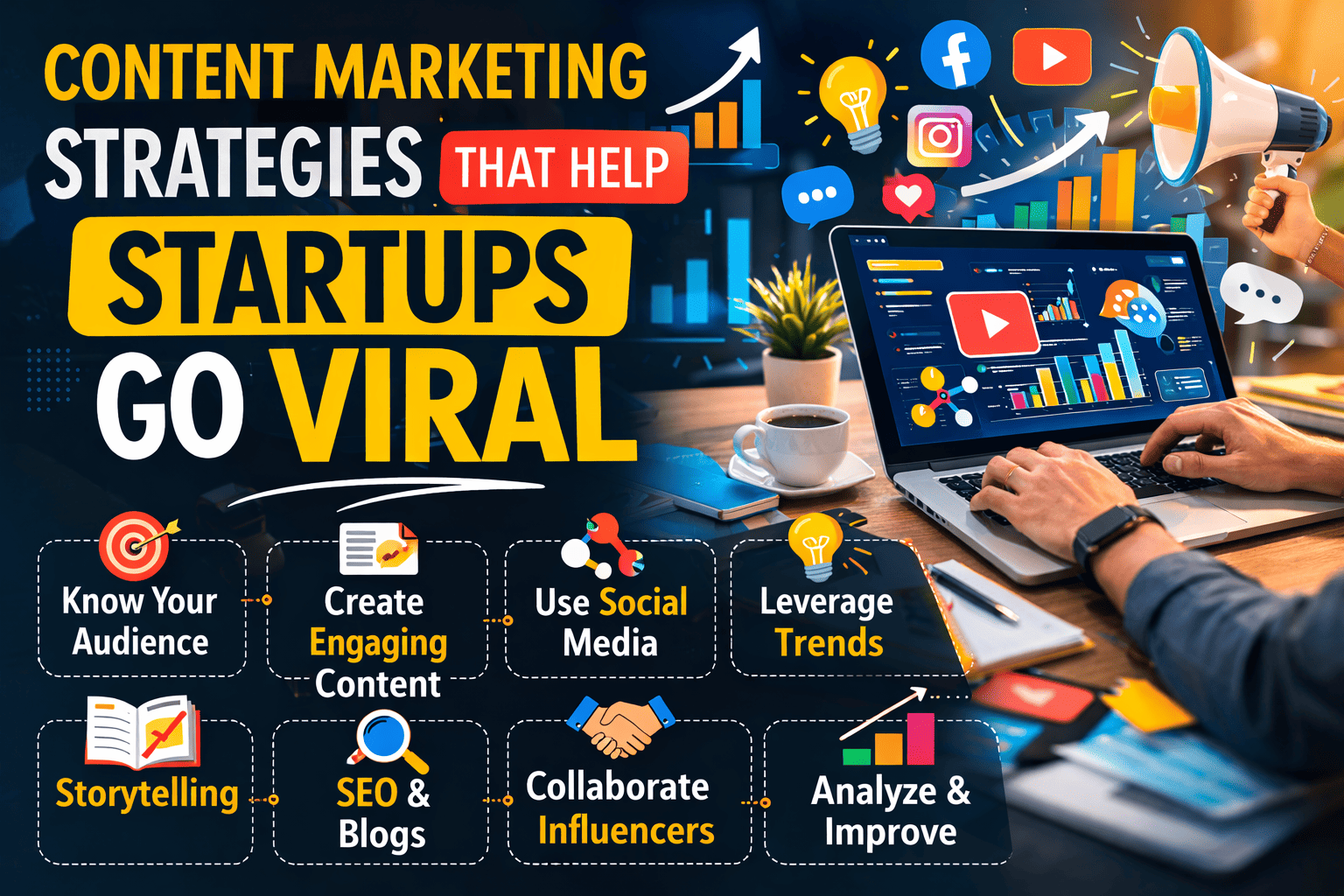
content marketing strategies for startups For startups, going viral can be the fastest way to gain visibility, attract leads, and scale quickly. But achieving virality doesn’t happen by chance—it requires strategic content marketing. Content marketing is more than posting blogs or social media updates; it’s about creating shareable, high-value, and targeted content that resonates with your audience.
This guide explores content marketing strategies for startups that can help you go viral, attract attention, and generate measurable growth. We’ll cover content types, distribution strategies, engagement hacks, and practical examples to implement immediately.
1. Understand Your Audience and Create Buyer Personas
The foundation of viral content is knowing who you are creating it for.
Steps to create effective personas:
Identify demographics: age, location, gender, profession
Understand interests: social platforms, hobbies, and content preferences
Define pain points: what problems are they seeking solutions for
Map out goals and motivations: what outcomes they value
Example: A SaaS startup targeting remote teams can focus content on productivity, collaboration tools, and remote work hacks.
Understanding your audience ensures your content resonates deeply, increasing shareability and engagement.
2. Craft Content That Evokes Emotion
Content that triggers emotions tends to be shared more widely. Positive, inspiring, or surprising content often goes viral faster than purely informational content.
Emotional triggers include:
Joy and humor
Surprise or curiosity
Inspiration and motivation
Relatability and nostalgia
Example: A startup offering eco-friendly products creates a video showing the impact of plastic waste and how their products help the environment. The emotional story encourages viewers to share with friends.
3. Use Storytelling to Connect With Your Audience
Stories are inherently engaging. Using storytelling in your content helps your audience connect with your startup on a personal level.
Tips for effective storytelling:
Highlight real customer success stories
Share your startup journey or behind-the-scenes moments
Use relatable characters or scenarios
Maintain a clear structure: problem → challenge → solution
Example: A startup selling financial planning tools shares a video of a real family managing debt and achieving financial freedom using their software, making it highly relatable and shareable.
4. Leverage Visual Content
Visual content is one of the most effective ways to attract attention and encourage sharing.
Visual strategies for virality:
Short videos for social media (Reels, TikTok, YouTube Shorts)
Infographics with clear, actionable information
Memes or GIFs that are humorous or relatable
Branded graphics for social sharing
Example: A health startup creates an infographic “10 Quick Tips for a Healthier Morning Routine” and shares it on Instagram and Pinterest, generating thousands of shares.
5. Incorporate User-Generated Content (UGC)
UGC builds trust and increases shareability because audiences feel involved. Encourage your users to create content around your brand.
UGC strategies:
Hashtag campaigns for users to share their experiences
Photo contests or challenges
Featuring customer reviews or testimonials
Gamified campaigns where users submit ideas or content
Example: A fitness startup asks users to share their workout routines using a branded hashtag. Top submissions are shared on the company’s social media, creating a viral loop.
6. Optimize Content for Social Sharing
Even the best content can fail if it isn’t optimized for sharing.
Tips to boost social shareability:
Include clear CTAs: “Share if you agree!”
Make content mobile-friendly
Use attention-grabbing headlines and visuals
Enable sharing buttons for every platform
Keep content concise and easy to digest
Example: A SaaS startup creates an interactive quiz on productivity tips and includes a “Share Your Score” button. Users share results on social media, increasing reach organically.
7. Leverage Influencer Partnerships
Influencers can amplify your content and make it go viral. Micro-influencers are particularly effective for startups due to their high engagement rates and lower costs.
Influencer marketing tips:
Collaborate with influencers in your niche
Co-create content that aligns with their audience
Encourage authentic storytelling rather than forced promotion
Track engagement metrics to measure success
Example: A fashion startup partners with TikTok micro-influencers to showcase styling tips using their products. Each video reaches thousands of potential customers quickly.
8. Create Interactive and Gamified Content
Interactive content increases engagement and encourages shares. Gamified elements create excitement and motivate users to participate.
Examples of interactive content:
Quizzes and polls
Interactive calculators or tools
Contests with rewards
Challenges on social media
Example: A productivity startup launches a 7-day challenge on Instagram where users track daily habits. Participants share their progress, making the campaign viral organically.
9. Leverage SEO and Content Optimization
Even viral content needs to be discoverable. Optimizing content for search engines ensures long-term visibility and shares.
SEO tips for viral content:
Use long-tail, high-intent keywords
Optimize meta titles, descriptions, and headings
Use internal linking to guide readers to other content
Include shareable visuals and structured data
Example: A startup blog article “Top 10 Marketing Hacks for Small Businesses” ranks on Google and drives organic traffic, which is then shared on social media for virality.
10. Publish Content at Peak Times
Timing affects content reach. Posting when your audience is most active increases engagement and shareability.
Tips:
Use analytics to identify peak engagement times
Post consistently and frequently
Test different posting schedules for optimal results
Example: A tech startup posts tutorial videos on weekdays at 7 PM when their audience of working professionals is most active on LinkedIn and Twitter.
11. Utilize Paid Amplification
While organic virality is ideal, strategic paid promotion can boost reach and create momentum for viral campaigns.
Paid strategies include:
Social media ads for high-performing organic content
Sponsored content with influencers
Retargeting campaigns for users who interacted with your content
Example: A startup promoting a new mobile app boosts an engaging video ad on Instagram, which leads to hundreds of shares and app downloads within days.
12. Track Metrics and Optimize
Monitoring performance is critical to understanding what resonates with your audience.
Metrics to track for viral content:
Shares and mentions
Engagement rate (likes, comments, clicks)
Website traffic from social platforms
Conversion rate from content-driven campaigns
Tip: Use tools like Google Analytics, Hootsuite, Buffer, and Sprout Social to monitor and adjust strategies.
13. Repurpose Content Across Channels
Repurposing allows you to maximize content reach and increase the chances of virality.
Repurposing strategies:
Turn blog posts into videos or infographics
Share snippets from webinars as social media posts
Convert research reports into slides or e-books
Syndicate content across multiple platforms
Example: A startup converts a blog article on email marketing tips into a carousel on LinkedIn, a TikTok video, and an infographic on Pinterest, increasing exposure and shares.
14. Build Community Around Your Content
Communities amplify content virality because users share and interact within groups.
Community-building tips:
Create social media groups or forums
Encourage discussions and user contributions
Reward active participants with recognition or incentives
Example: A SaaS startup creates a Slack community for marketers where members share content and insights. Posts frequently go viral within the community, attracting more leads.
15. Experiment and Iterate
Virality often comes from experimentation. Test different formats, headlines, and platforms to see what resonates.
Experimentation tips:
Run small-scale tests before scaling
Track performance and iterate based on data
Learn from both successful and failed campaigns
Example: A startup testing humorous TikTok videos notices a particular format generates more shares. They then create a series, amplifying reach further.
Conclusion
Viral growth is achievable for startups by implementing strategic content marketing strategies. By understanding your audience, creating emotionally engaging content, leveraging visuals, interactive elements, and influencer partnerships, startups can dramatically increase reach and visibility.
At Beta Digital Marketing, we help startups implement content marketing strategies for measurable growth, from social media campaigns and blog content to AI-driven optimizations and viral outreach techniques.
Start applying these strategies today, track your metrics, and iterate continuously to create content that resonates, engages, and spreads—helping your startup go viral and scale faster.