 hello@betadigitalmarketing.com
 +91 9513999901
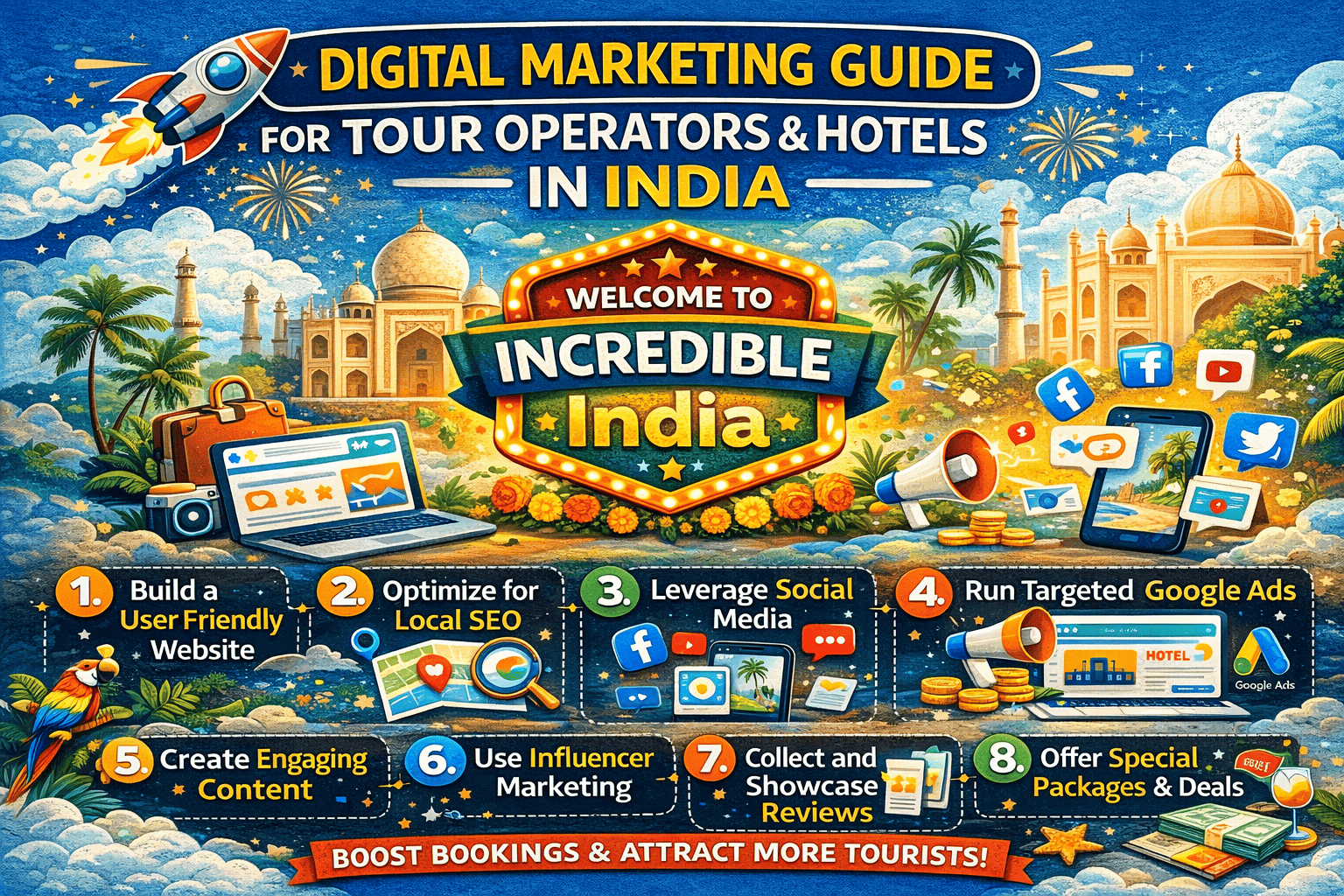
- Written by: admin
- March 13, 2026
Introduction
Digital Marketing for Tour Operators and Hotels in India is essential in 2026 to attract more travelers, increase bookings, and build a strong online presence. The travel and hospitality industry in India is booming. From the majestic Himalayas to the serene backwaters of Kerala, India attracts millions of domestic and international tourists every year. But in such a competitive market, simply offering exceptional experiences isn’t enough. Tour operators and hotels must embrace digital marketing strategies to attract travelers, build loyalty, and increase bookings.
This comprehensive guide will walk you through effective digital marketing tactics tailored specifically for the Indian travel and hospitality industry.
1. Understanding the Digital Landscape in India
India has over 900 million internet users as of 2026, with a significant portion actively searching for travel services online. Mobile internet usage dominates, making mobile-friendly websites and apps critical. Social media platforms like Instagram, Facebook, and YouTube play a major role in influencing travel decisions.
Key insights for tour operators and hotels:
Search engines drive bookings: Travelers frequently search for hotels, tours, and experiences on Google.
Visual content is essential: Pictures, videos, and virtual tours influence choices significantly.
Online reviews matter: Platforms like Google Reviews, TripAdvisor, and Booking.com are trusted sources for travelers.
Your website is your online storefront. Travelers want a website that is easy to navigate, visually appealing, and informative. Here’s what you should focus on:
Mobile-Friendly Design: Most travelers search for tours using smartphones. A responsive design improves user experience and Google rankings.
Fast Loading Speed: Slow websites lose potential bookings. Use lightweight images and a reliable hosting service.
Clear Calls-to-Action (CTA): Use buttons like “Book Now,” “Check Availability,” or “Get a Quote.”
Booking Forms & Calendars: Make it easy for users to check dates and availability.
Tip: Include client testimonials, destination galleries, and detailed itineraries to build trust.
2. Build a Strong Online Presence
A strong digital footprint is the foundation of any digital marketing strategy.
a) Website Optimization
Your website is your digital storefront. Key elements to focus on:
Mobile responsiveness: Ensure your website works seamlessly on smartphones.
Fast loading speed: Users often abandon slow websites. Tools like Google PageSpeed Insights can help.
Clear navigation: Easy-to-use menus and clear booking buttons increase conversions.
Local SEO: Optimize for search queries like “Best hotels in Jaipur” or “Kerala backwater tour packages.”
b) Social Media Presence
Social media platforms allow direct engagement with potential travelers. Effective tactics include:
Instagram: Share high-quality images, reels, and stories showcasing your services.
Facebook: Use it for ads, reviews, and community engagement.
YouTube: Post travel guides, hotel tours, and destination highlights.
3. Search Engine Optimization (SEO)
SEO ensures your website ranks high on search engines, driving organic traffic.
Key SEO Strategies:
Keyword Research: Use tools like Google Keyword Planner to find popular travel-related keywords. Focus on long-tail keywords such as “luxury boutique hotels in Udaipur” or “family-friendly Kerala tour packages.”
Content Marketing: Write blogs about destinations, travel tips, itineraries, or festival experiences.
On-Page SEO: Optimize title tags, meta descriptions, headers, and images for target keywords.
Local SEO: Claim your Google My Business listing, add accurate business information, and collect positive reviews.
4. Pay-Per-Click Advertising (PPC)
PPC campaigns, like Google Ads, are effective for immediate visibility.
Google Ads for Hotels and Tours: Bid on keywords such as “book Rajasthan desert safari” or “Kerala honeymoon packages.”
Display Ads: Use visually appealing ads targeting travelers browsing travel blogs or YouTube.
Retargeting Campaigns: Show ads to visitors who previously visited your site to remind them of your services.
5. Content Marketing for Travel
Content marketing is about providing value, not just selling.
Travel Blogs: Share guides, local experiences, and itineraries. For example, “Top 10 Hidden Beaches in Goa” or “Best Monsoon Treks in India.”
Video Content: Short clips, drone shots, and hotel walkthroughs can attract more engagement.
User-Generated Content: Encourage guests to share their experiences and tag your hotel or tour company. This builds credibility.
6. Social Media Marketing Tactics
Social media is powerful for storytelling and engagement.
Instagram Reels and Stories: Highlight local culture, hotel amenities, or tour experiences.
Facebook Groups: Engage with travel communities and promote offers subtly.
Influencer Collaborations: Partner with travel bloggers or influencers to reach a wider audience.
Contests and Giveaways: Encourage followers to share posts, increasing organic reach.
7. Email Marketing for Retention
Email marketing is one of the most cost-effective strategies for nurturing leads.
Welcome Emails: Send personalized welcome messages to new subscribers.
Promotional Campaigns: Announce discounts, holiday packages, or last-minute deals.
Newsletters: Share travel tips, upcoming events, and destination highlights.
Segmentation: Categorize your audience by interests, past bookings, or location for targeted campaigns.
8. Reputation Management
In the travel industry, your reputation directly impacts bookings.
Monitor Reviews: Respond promptly to reviews on Google, TripAdvisor, and booking platforms.
Handle Negative Feedback Gracefully: Address complaints professionally and offer solutions.
Encourage Positive Reviews: Follow up with guests and ask for reviews to build credibility.
9. Video Marketing and Virtual Tours
Visual storytelling is a huge conversion driver.
Hotel Virtual Tours: Showcase rooms, lobbies, dining areas, and amenities.
Destination Videos: Capture scenic landscapes, cultural experiences, and local festivals.
Live Streaming: Host live tours or Q&A sessions on Instagram and Facebook.
10. Mobile Marketing
Since most Indian travelers search and book on mobile devices, mobile marketing is crucial.
SMS Campaigns: Send booking confirmations, promotions, or travel tips.
Mobile-Friendly Booking Engine: Ensure your booking system works flawlessly on smartphones.
App Marketing: If you have a travel app, optimize push notifications for offers, reminders, and seasonal deals.
11. Influencer Marketing for Hotels and Tours
Influencers can give a personal touch to your marketing:
Partner with micro-influencers (5k–50k followers) for niche targeting.
Offer free stays or tours in exchange for honest reviews and posts.
Track ROI by monitoring referral traffic and booking conversions.
12. Analytics and Tracking
Without measuring results, strategies won’t be effective.
Google Analytics: Track website traffic, booking conversions, and user behavior.
Social Media Insights: Use Instagram/Facebook analytics to monitor engagement, reach, and follower growth.
Campaign Performance: Monitor PPC and email campaigns to optimize ROI.
13. Emerging Trends in 2026
The travel industry is evolving rapidly. Stay ahead by adopting these trends:
AI and Chatbots: Offer instant customer support and booking assistance.
Voice Search Optimization: Optimize for queries like “best hotels in Jaipur near palace.”
Sustainable Tourism: Promote eco-friendly tours and green hotel practices.
Augmented Reality (AR): Virtual experiences of destinations or hotel amenities before booking.
14. Practical Tips for Small Tour Operators and Hotels
For smaller businesses operating on limited budgets:
Focus on Niche Marketing: Highlight unique offerings like adventure tours, heritage stays, or culinary experiences.
Collaborate Locally: Partner with local restaurants, guides, and transport services to create attractive packages.
Leverage Free Platforms: Use social media, Google My Business, and TripAdvisor to build visibility without heavy costs.
Collect Testimonials: Showcase guest experiences through videos and social posts.
Conclusion
Digital marketing for tour operators and hotels in India isn’t optional—it’s essential. From SEO and social media marketing to email campaigns and influencer collaborations, each strategy plays a vital role in attracting travelers and increasing bookings.
By staying updated with the latest trends, monitoring analytics, and providing value-driven content, your business can create a strong online presence, build trust with travelers, and ultimately achieve sustainable growth.
Investing in digital marketing today ensures that your hotel or tour service remains visible, competitive, and successful in the ever-growing Indian travel industry.