 hello@betadigitalmarketing.com
 +91 9513999901
- Written by: admin
- March 20, 2026
Introduction
Let me say this straight. Everyone is obsessed with Gen Z right now. Every brand, every campaign, every “trend report” is trying to decode what 22-year-olds want.
But here is the thing… while all that noise is happening, there is this massive group of people quietly sitting there with money, time, and honestly, a lot of life experience and most brands are still treating them like a side note.
Yeah, I am talking about Boomers.
And the way we talk about aging? It is kind of messed up, to be honest.
Aging Today Feels… Weirdly Embarrassing
This might sound a bit harsh, but growing old today, especially in Western culture, almost feels like something you are supposed to hide.
Think about it.
Botox, fillers, anti-aging creams all of this used to feel like some secret celebrity thing. Now it is just… normal. Everyday stuff. You scroll Instagram, and it is everywhere. People are not just aging anymore, they are trying to reverse it.
And you might be wondering, is that really such a big deal?
Well, yeah. Because it says something deeper.
It is not just about looking good. It is about this idea that aging itself is a problem that needs fixing.
At the same time, look at how older people are shown in the media. You will see headlines like:
“80-year-old runs a marathon”
“70-year-old skydives for the first time”
“Grandpa rides a Harley across the country”
And sure, those stories are inspiring. No doubt.
But also… they feel a bit like pressure.
The Strange Pressure to “Stay Young”
Here is the part that people do not really talk about.
These stories are not just celebrating older people. They are quietly setting a standard.
Like, if you are not out there doing something extreme or “youthful,” then what are you doing?
It becomes this weird performance. Aging is no longer just something that happens. It is something you have to prove you are doing “well.”
And honestly, that is exhausting just to think about.
Because the truth is way simpler than all this.
Most people, as they age, slow down. They need more support. Maybe it is physical. Maybe it is emotional. Maybe it is just someone checking in more often.
And that is not failure. That is just… being human.
But the way culture frames it? It almost makes needing help feel like you have lost something important.
Where Did This Mindset Even Come From?
If you zoom out a bit, this did not just randomly happen.
There is this shift that started way back during the Industrial Revolution. Families used to live together across generations. Older people were part of everyday life. There was this natural respect built into the system.
Then things changed.
People moved to cities. Work became more individual. Independence became everything.
Your value started getting tied to what you could do on your own. How productive you were. How “useful” you were.
So when that independence starts fading with age… it feels scary. Almost like losing your identity.
And now, add social media and image culture on top of that. It just amplifies everything.
You are not just aging. You are being watched while you age.
The Lie We All Kind of Believe
Here is the uncomfortable truth.
Nobody stays fully independent forever.
At some point, everyone needs help. Whether it is small things or big things, it happens.
But we have built this idea that needing support is something to avoid at all costs. Like it is some kind of personal failure.
And deep down, I think most people know that is not true.
But still, the fear is there.
So instead of accepting aging, we try to fight it. Or worse, we pretend it is not happening.
And Somehow… Brands Are Missing This Completely
This is where it gets interesting.
Because while all of this is happening culturally, there is also a massive business opportunity sitting right there.
Boomers are not just “older consumers.” They hold a huge amount of wealth. They are active. They are making decisions. They are living full lives.
But the way brands talk to them?
It is either overly dramatic like aging is this sad decline.
Or overly unrealistic like they are all superhumans running marathons at 75.
There is no middle ground. No realness.
And that is the gap.
What Real Representation Actually Looks Like
To be honest, the internet is already showing us what works.
If you go on YouTube, you will find creators who are just… being real about aging.
Talking about things like:
Recovering from low-energy days
Figuring out health issues
Dealing with thinning hair
Making peace with regrets
And people love it.
Not because it is perfect. But because it is honest.
There is something refreshing about hearing someone say, “Yeah, this part of aging is tough, but here is how I deal with it.”
No filters. No pretending.
Just real life.
And you can feel the difference immediately.
So What Should Brands Actually Do?
This might sound obvious, but apparently it is not.
Stop trying to make aging look like something it is not.
You do not need to turn Boomers into superheroes. And you definitely should not treat them like they are fading away.
Just show real life.
Show support systems. Show relationships. Show routines. Show adjustments people make as they age.
Talk about products and services in a way that does not feel like “fixing a problem,” but more like helping someone live better.
Because that is what people actually want.
Not denial. Not exaggeration.
Just honesty.
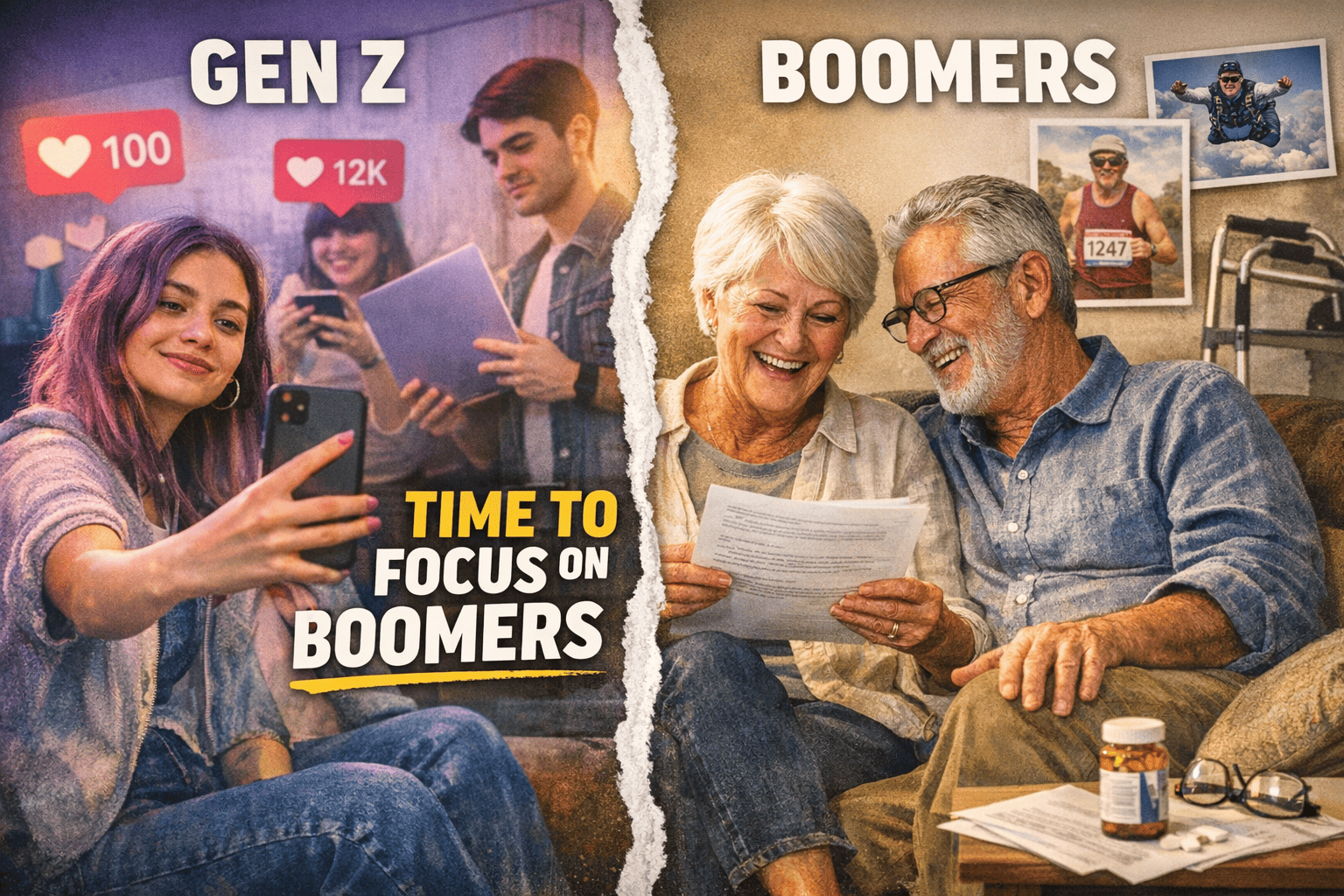
Maybe It Is Time to Shift the Focus
We have spent years trying to understand Gen Z. And sure, that matters.
But maybe it is time to balance that out a bit.
Because Boomers are not going anywhere. In fact, they are becoming more relevant, not less.
And the brands that figure this out early? They are probably going to win big.
Not by shouting louder.
But by being more real.
One Last Thought
Okay, slightly random, but hear me out.
Imagine a retirement community designed by millennials.
Not the boring kind. Something actually fun. Good food, social spaces, maybe even avocado toast brunches every day.
Sounds kind of ridiculous… but also, kind of amazing?
That is the point.
Aging does not have to be this dull, depressing phase.
But it also does not have to be a constant performance of youth.
There is a middle space there. And it is way more interesting than what we are currently being sold.