 hello@betadigitalmarketing.com
 +91 9513999901
- Written by: admin
- March 7, 2026
Introduction
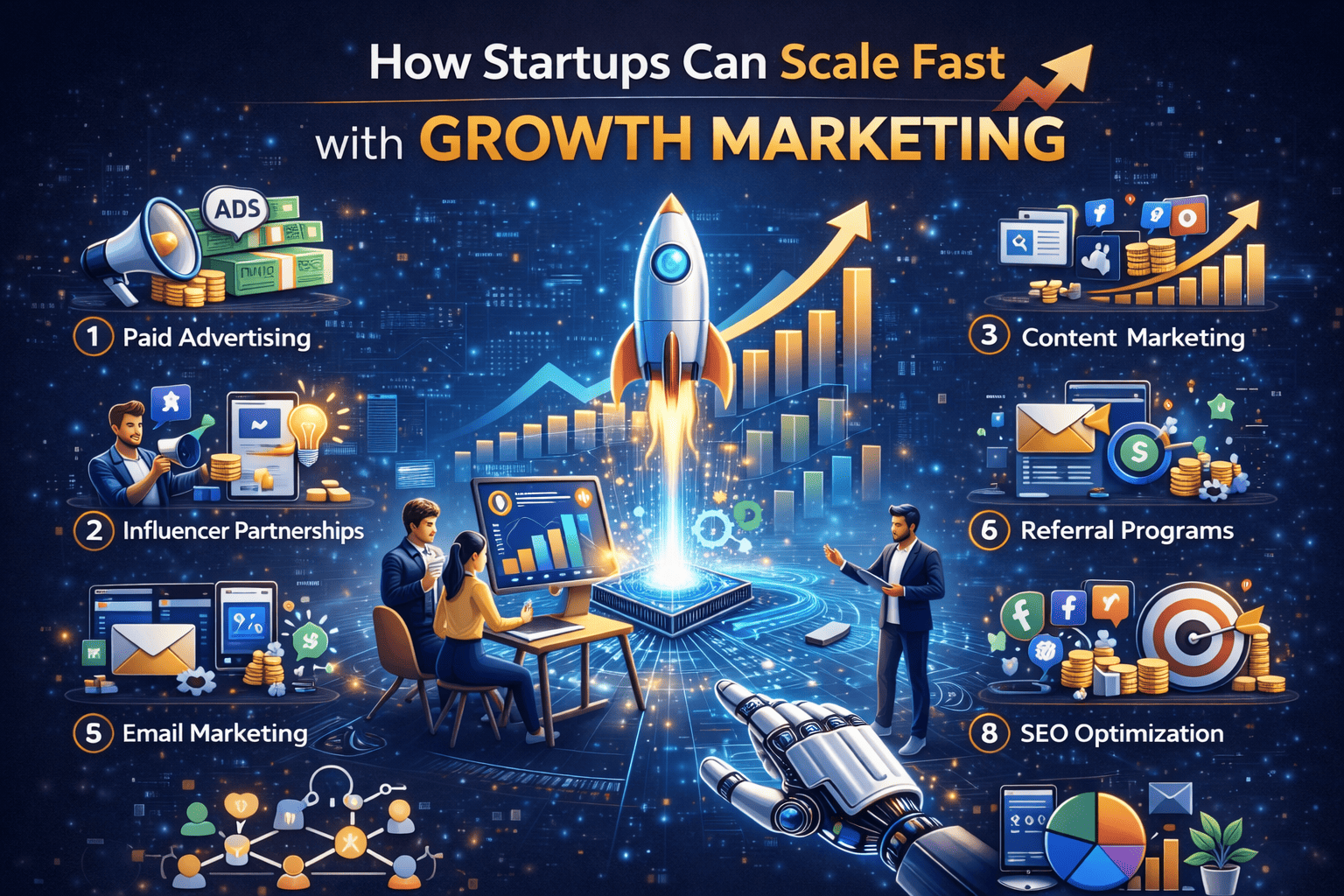
growth marketing for startups Scaling a startup quickly is one of the biggest challenges entrepreneurs face. Limited resources, small teams, and high competition make traditional marketing approaches less effective. This is where growth marketing for startups comes into play.
Unlike conventional marketing, which focuses on brand awareness or long-term campaigns, growth marketing is data-driven, experimental, and results-oriented. It combines analytics, automation, personalized campaigns, and performance optimization to drive measurable growth.
In this guide, we’ll explore how startups can scale fast with growth marketing, sharing actionable strategies, real-world examples, and tools that can accelerate your growth journey.
1. Understanding Growth Marketing for Startups
Growth marketing is a holistic approach to attracting, converting, and retaining customers. Unlike traditional marketing, growth marketing focuses on end-to-end customer acquisition and retention, often leveraging technology, automation, and data analytics.
Key features of growth marketing:
Data-driven experimentation
Customer-centric campaigns
Omnichannel strategy (social, email, PPC, content, SEO)
Rapid iteration and optimization
Example: A SaaS startup can run email, social, and paid campaigns simultaneously, measure performance, and quickly optimize the strategy based on results, ensuring faster scaling.
Why it matters for startups:
Maximizes ROI on limited budgets
Targets the right audience efficiently
Speeds up decision-making and scaling
2. Set Clear Growth Goals and Metrics
Before implementing any growth strategy, startups must define clear objectives. This ensures all efforts are aligned and measurable.
Steps to set goals:
Define KPIs: leads, conversions, CAC (Customer Acquisition Cost), LTV (Lifetime Value)
Break down goals by channel: social media, email, paid ads, referrals
Set measurable timelines: weekly, monthly, and quarterly benchmarks
Tip: Startups should focus on SMART goals (Specific, Measurable, Achievable, Relevant, Time-bound) to track progress effectively.
Example: A D2C e-commerce startup may set a goal to acquire 500 new leads via Instagram ads in the first month, while keeping CAC under $10.
3. Leverage AI and Automation
AI and marketing automation tools are essential for scaling efficiently. They save time, improve targeting, and increase conversion rates.
Applications of AI in growth marketing:
Predictive analytics for identifying high-value prospects
AI-powered content creation for blogs, ads, and social media
Marketing automation for emails, lead nurturing, and workflows
Real-time ad optimization and bid management
Tools for startups:
HubSpot AI – lead scoring and email automation
ChatGPT & Jasper.ai – content and ad copy creation
Google Ads AI – smart bidding and targeting
Zapier – workflow automation across platforms
Example: A SaaS startup can use AI to segment users, trigger automated onboarding emails, and retarget users with personalized campaigns, increasing conversion rates while saving human effort.
4. Optimize the Customer Acquisition Funnel
Social media is a cost-effective channel for startups to reach their audience and generate leads. Platforms like Facebook, LinkedIn, Instagram, and TikTok allow precise targeting.
Social media lead generation strategies:
Lead Ads: Platforms like Facebook and LinkedIn allow users to submit forms without leaving the platform.
Engaging Content: Share tips, success stories, or tutorials to attract followers and drive leads.
Groups & Communities: Create niche groups to interact with potential customers and build trust.
Influencer Collaborations: Partner with micro-influencers to reach a highly targeted audience.
Example: A B2B startup can use LinkedIn lead generation forms targeting decision-makers in specific industries.
Benefit: Social media campaigns increase brand awareness while capturing high-quality leads.
5. Content Marketing as a Growth Lever
High-quality content is essential for attracting, nurturing, and converting leads. Startups can scale faster by using content strategically.
Effective content strategies:
Blogs optimized for SEO and long-tail keywords
Whitepapers and e-books as lead magnets
Case studies and success stories
Video tutorials, webinars, and podcasts
Tip: Repurpose content across channels to maximize reach and lead capture.
Example: A startup providing project management software created a blog series on “Remote Team Productivity Hacks,” offering downloadable templates. This attracted highly qualified leads and boosted email subscriptions.
6. Social Media Growth Marketing
Paid advertising allows startups to generate leads quickly by targeting specific audiences with high purchase intent.
PPC lead generation strategies:
Google Ads: Bid on high-intent keywords to attract users searching for solutions.
Facebook/Instagram Ads: Retarget website visitors or engage lookalike audiences.
LinkedIn Ads: Ideal for B2B startups targeting decision-makers.
A/B Testing: Test ad creatives, copy, and targeting for maximum ROI.
Example: A fintech startup can run Google Ads targeting keywords like “best budgeting app for startups”, converting visitors into app sign-ups.
Benefit: Paid ads provide measurable results and can be scaled based on performance.
7. Email Marketing & Lead Nurturing
Email remains one of the most effective channels for growth marketing. Automated, personalized campaigns help nurture leads through the funnel.
Email growth tactics:
Welcome sequences for new subscribers
Drip campaigns triggered by user behavior
Segmented emails based on demographics, interests, and engagement
Re-engagement campaigns for dormant leads
Example: A SaaS startup automated onboarding emails with tips and tutorials, increasing trial-to-paid conversions by 30%.
8. Paid Ads & Retargeting
Paid campaigns allow startups to scale faster, especially when targeting high-intent audiences. Retargeting ensures leads who don’t convert initially are brought back.
Paid marketing tips:
Test multiple ad creatives to optimize performance
Use retargeting ads for abandoned carts or demo users
Track ROI closely using metrics like ROAS and CPA
Example: A startup offering online courses ran Google Ads targeting “best Python course for beginners” and retargeted users who visited the landing page but didn’t enroll. This boosted conversions by 40%.
9. Referral & Affiliate Programs
Word-of-mouth is one of the most powerful growth levers. Referral and affiliate programs encourage users to promote your startup in exchange for rewards.
Referral strategies:
Offer incentives such as discounts, credits, or perks
Provide easy sharing options through social media or email
Track and reward top-performing affiliates
Example: Dropbox’s referral program rewarded users with extra storage for each friend referred, driving rapid early growth.
Benefit: Low-cost acquisition with highly qualified leads.
10. Data Analytics & Experimentation
Growth marketing relies heavily on data and experimentation to optimize campaigns and scale efficiently.
Key practices:
Track metrics like CAC, LTV, conversion rates, CTR, and engagement
A/B test landing pages, email sequences, and ad creatives
Use dashboards to monitor campaigns in real-time
Tools: Google Analytics, Mixpanel, HubSpot, Tableau
Example: A fintech startup tested multiple CTA buttons on their landing page and identified one that increased conversions by 20%. Continuous experimentation ensures campaigns improve over time.
11. Scaling Strategies for Startups
Once the core growth marketing strategies are working, startups can scale faster using:
Channel Diversification: Expand into multiple platforms (social, PPC, SEO, content syndication)
Automation: Reduce manual effort in lead nurturing, social posting, and reporting
Partnerships & Collaborations: Collaborate with complementary brands to reach new audiences
International Expansion: Optimize campaigns for new regions with localized content
Example: A SaaS startup expanded its marketing from the US to Europe by localizing content and running geo-targeted paid campaigns, doubling lead generation within three months.
12. Common Challenges & How to Overcome Them
Challenges:
Limited budget for marketing campaigns
Difficulty tracking ROI across multiple channels
Low conversion rates from unqualified leads
Scaling without losing personalization
Solutions:
Focus on high-ROI channels first
Use automation and AI tools to save costs and improve targeting
Continuously analyze and optimize campaigns
Segment audiences for more personalized messaging
Lead generation is not a one-time effort. Startups must track results, measure ROI, and optimize campaigns regularly.
Key metrics to monitor:
Cost per lead (CPL)
Conversion rates at every funnel stage
Lead quality and engagement
Customer lifetime value (LTV)
Tip: Use dashboards to track performance and iterate quickly. Stop campaigns that underperform and scale the ones that deliver results.
Conclusion
Scaling a startup fast requires a structured, data-driven growth marketing strategy. By leveraging AI, content marketing, social media, email, paid campaigns, referrals, and analytics, startups can attract high-quality leads, optimize campaigns, and convert prospects into loyal customers efficiently.
At Beta Digital Marketing, we help startups implement growth marketing strategies that deliver measurable results. By combining experimentation, automation, and performance analysis, we ensure your startup can scale faster, achieve higher ROI, and maintain sustainable growth.
Start implementing these strategies today, track your results, and iterate continuously to accelerate your startup’s growth.