 hello@betadigitalmarketing.com
 +91 9513999901
- Written by: admin
- March 7, 2026
Introduction
Social Media Marketing for Startups Social media has become a critical channel for startups aiming to grow quickly. Unlike traditional marketing, social media allows startups to engage directly with their audience, build brand awareness, and generate leads with minimal budgets.
However, achieving measurable results requires a strategic approach. Simply posting content occasionally is not enough. Startups need to leverage social media platforms, understand their audience, and use data-driven strategies to accelerate growth.
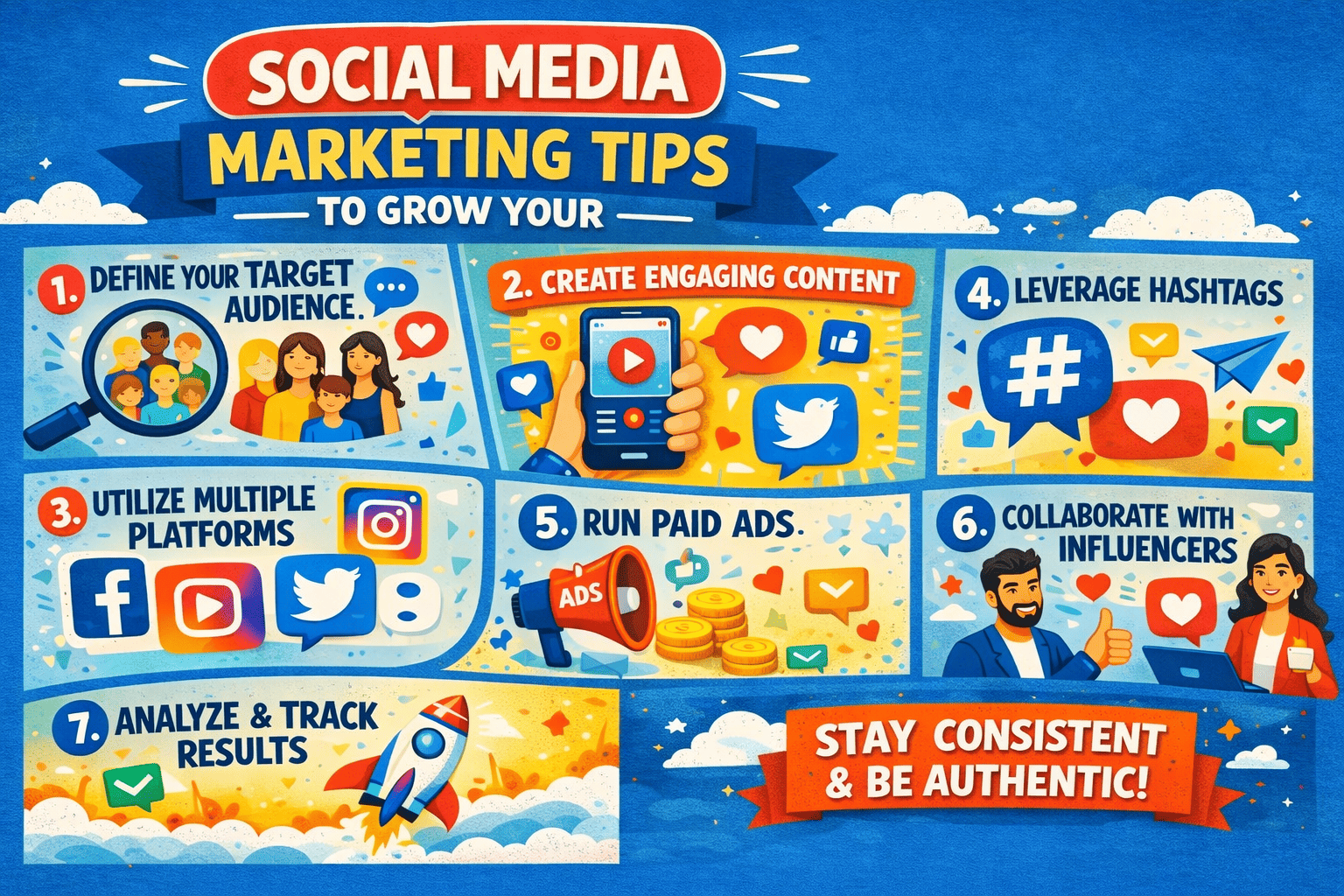
In this guide, we’ll explore social media marketing tips to grow your startup faster, including content strategies, engagement hacks, paid campaigns, analytics, and advanced tactics to scale your business effectively.
1. Define Your Social Media Goals and KPIs
Before executing campaigns, startups must define clear goals and key performance indicators (KPIs).
Steps to define social media goals:
Identify objectives: brand awareness, lead generation, sales, or customer engagement
Set measurable KPIs: follower growth, CTR, conversion rate, engagement rate
Align campaigns with overall business objectives
Example: A SaaS startup may aim to generate 500 qualified leads from LinkedIn over three months, tracking conversions from social media posts and ads.
Benefit: Clear goals ensure all efforts are measurable and aligned with business growth.
2. Know Your Audience
Understanding your target audience is crucial for effective social media marketing.
Audience research strategies:
Analyze demographics: age, gender, location, profession
Study interests and behavior: social platforms, content preferences, engagement habits
Create buyer personas: detailed profiles representing your ideal customer
Example: A fitness startup targets millennials who actively follow health and wellness content on Instagram. Tailoring content to their interests increases engagement and conversions.
Tip: Use analytics tools like Facebook Insights, Instagram Analytics, and LinkedIn Analytics to understand audience behavior.
3. Choose the Right Platforms
Not all social media platforms suit every startup. Focus on platforms where your audience is most active.
Platform selection tips:
Instagram: Ideal for visually-driven brands, D2C products, and lifestyle businesses
LinkedIn: Best for B2B startups and professional services
Facebook: Broad audience reach, suitable for community building
Twitter/X: Real-time engagement, news, and updates
TikTok: Short-form video content for younger audiences and viral growth
Example: A B2B SaaS startup focuses on LinkedIn for lead generation and Instagram for brand awareness, tailoring content for each platform.
4. Create Engaging and Valuable Content
Content is the backbone of social media marketing. Startups need to create content that educates, entertains, or inspires their audience.
Content strategies:
Educational Content: How-tos, tutorials, industry tips
Entertaining Content: Memes, polls, short videos, and challenges
User-Generated Content: Share testimonials, reviews, and user stories
Behind-the-Scenes Content: Show company culture, product development, and team insights
Tip: Mix formats—images, videos, reels, infographics, and carousel posts—for better engagement.
Example: A startup selling eco-friendly products posts tips on sustainable living alongside product showcases, engaging and educating followers simultaneously.
5. Use Social Media Scheduling and Automation Tools
Consistency is key in social media marketing. Automation helps startups maintain regular posting schedules without overloading the team.
Tools to use:
Hootsuite / Buffer: Schedule posts and monitor engagement
Later / Planoly: Visual scheduling for Instagram and Pinterest
Zapier: Automate content sharing across platforms
Example: A startup schedules posts across LinkedIn, Instagram, and Facebook for the week, ensuring consistent brand presence while freeing the marketing team to focus on strategy.
6. Leverage Paid Advertising for Faster Growth
Paid social campaigns accelerate growth by targeting specific audiences and driving measurable results.
Paid strategies for startups:
Facebook & Instagram Ads: Retarget website visitors or lookalike audiences
LinkedIn Ads: Target decision-makers for B2B lead generation
TikTok Ads: Capture attention with short-form, viral content
Tips for effective paid campaigns:
A/B test ad creatives, copy, and CTA buttons
Monitor ROI and adjust campaigns frequently
Use retargeting to convert interested users
Example: A SaaS startup runs LinkedIn sponsored content targeting managers in their industry, generating qualified leads for the sales team.
7. Engage Actively With Your Audience
Engagement drives visibility and trust on social media. Startups must interact with followers consistently.
Engagement tactics:
Respond to comments and direct messages promptly
Host Q&A sessions or live streams
Run polls, quizzes, and interactive stories
Share user-generated content to encourage participation
Example: A food delivery startup engages followers with polls about their favorite dishes, increasing story views and follower interactions.
8. Collaborate With Influencers and Micro-Influencers
Influencer marketing helps startups reach niche audiences faster. Micro-influencers are often more affordable and highly engaged.
Strategies:
Partner with influencers in your industry for product promotion
Co-create content or host giveaways
Track engagement and conversions from influencer campaigns
Example: A fashion startup partners with micro-influencers on Instagram to showcase new collections, generating leads and increasing website traffic.
9. Leverage Analytics to Optimize Campaigns
Social media analytics provide insights into what works and what doesn’t. Startups must track metrics and KPIs to refine strategies.
Key metrics:
Engagement rate (likes, comments, shares)
Reach and impressions
Click-through rate (CTR)
Conversion rate and lead generation
Tools: Facebook Insights, Instagram Analytics, LinkedIn Analytics, Google Analytics
Example: A startup analyzes post engagement data and notices carousel posts perform better than static images, adjusting the content strategy accordingly.
10. Create Shareable and Viral Content
Shareable content increases reach and brand awareness without additional spend.
Tips for creating viral content:
Focus on emotional or informative value
Use short videos, infographics, or memes
Encourage followers to share and tag friends
Monitor trends and participate in challenges
Example: A tech startup shares a fun, educational explainer video that gets shared widely, attracting new followers and potential leads.
11. Build and Nurture Social Media Communities
Communities foster loyalty, engagement, and advocacy. Startups can leverage groups or forums to create a loyal fanbase.
Community-building tips:
Create Facebook or LinkedIn groups for your niche
Encourage discussions, user-generated content, and feedback
Offer exclusive content or early access to products
Example: A productivity SaaS startup creates a LinkedIn group for remote workers, providing tips, resources, and live sessions, increasing brand authority and lead generation.
12. Integrate Social Media With Other Marketing Channels
A multi-channel strategy enhances the effectiveness of social media campaigns.
Integration strategies:
Connect social media campaigns with email marketing
Use retargeting ads across social media and display networks
Promote blog content and gated resources on social platforms
Example: A startup running a webinar promotes it on Instagram, LinkedIn, and via email, capturing high-quality leads from multiple channels.
13. Advanced Growth Hacks for Startups
Tips for scaling faster with social media:
Run UGC campaigns to encourage content sharing
Collaborate with micro-influencers for niche audiences
Use AI tools to generate captions, ad copy, and visuals
Leverage chatbots for instant lead capture and engagement
Monitor competitors’ social strategies for insights
Example: A startup uses AI-generated ad creatives and retargeting sequences, reducing CPC while doubling leads in one month.
14. Common Challenges and How to Overcome Them
Challenges:
Limited resources and budgets
High competition on social media
Low engagement or follower growth
Difficulty tracking ROI
Solutions:
Prioritize platforms with highest ROI
Focus on organic engagement and paid campaigns strategically
Use analytics to measure and optimize campaigns continuously
Automate repetitive tasks to free up time for strategy
Conclusion
Social media marketing is a powerful tool for startups looking to grow faster. By combining engaging content, paid campaigns, influencer partnerships, community-building, analytics, and AI tools, startups can generate leads, increase brand awareness, and scale efficiently.
At Beta Digital Marketing, we help startups implement social media marketing strategies for measurable growth. From content creation and automation to paid campaigns and analytics, we ensure every effort drives results.
Start implementing these social media marketing tips today to grow your startup faster and stay ahead of the competition.