 hello@betadigitalmarketing.com
 +91 9513999901
- Written by: admin
- March 10, 2026
Introduction
Every startup wants growth, customers, and revenue. But many startups struggle because they don’t have a clear marketing system that converts visitors into paying customers. That is where a marketing funnel becomes extremely important. A well-designed marketing funnel helps startups guide potential customers through a structured journey—from first discovering the brand to eventually becoming loyal customers.
The startup marketing funnel is not just a marketing concept; it is a growth strategy. It helps startups understand how users interact with their brand and what actions they need to take at each stage of the customer journey. Without a funnel, startups often rely on random marketing activities that bring traffic but fail to convert visitors into customers.
In this ultimate startup marketing funnel guide, we will explain how marketing funnels work, why they are essential for startups, and how to build a funnel that drives leads, conversions, and long-term growth.
What Is a Startup Marketing Funnel
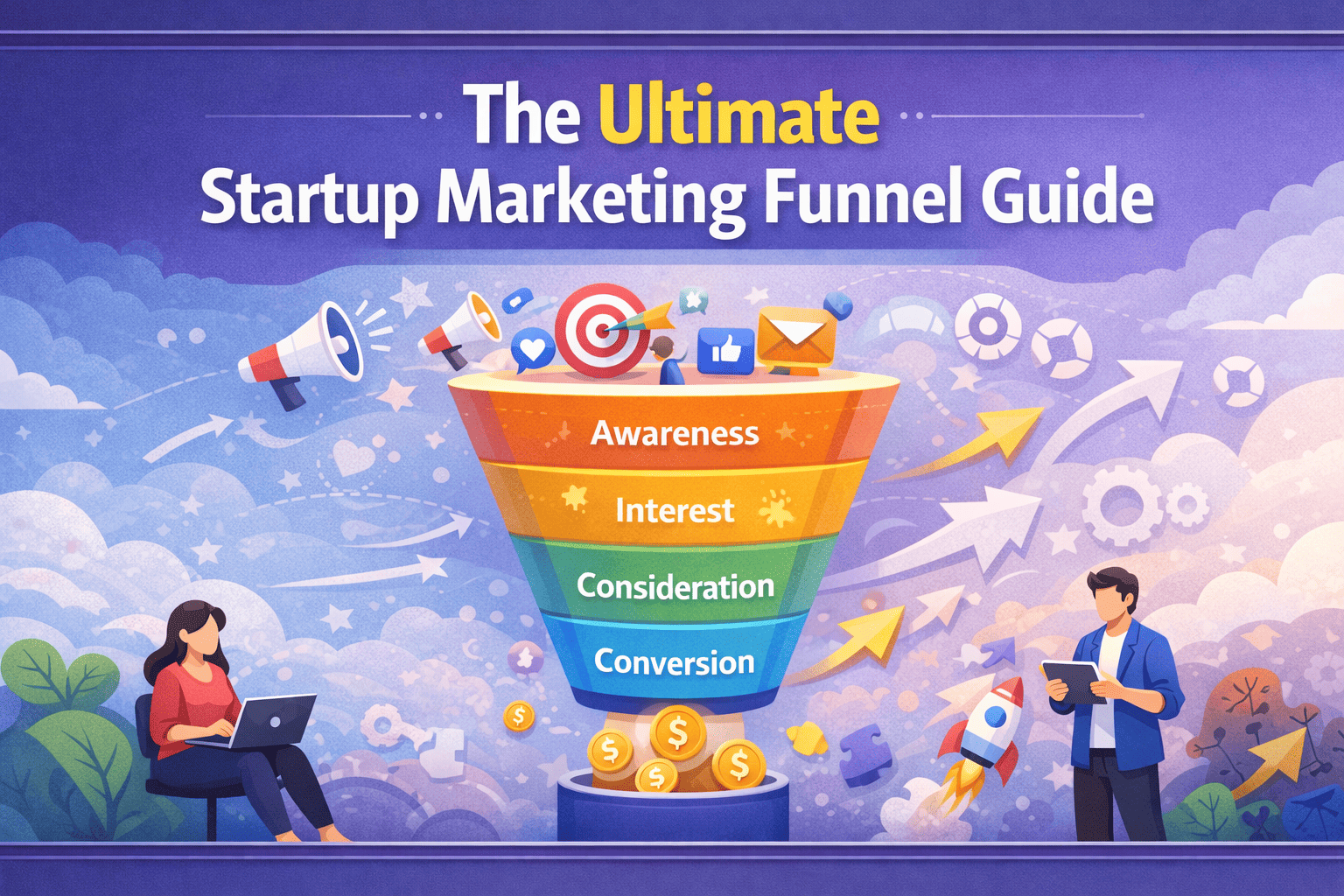
A startup marketing funnel is a step-by-step process that guides potential customers from the moment they discover your brand to the moment they make a purchase and become loyal advocates. It represents the journey that users take before becoming paying customers.
The funnel is called a “funnel” because many people enter at the top but fewer move down to the final purchase stage. At the beginning, thousands of users may become aware of your product, but only a small percentage convert into paying customers.
Understanding this process helps startups improve their marketing strategies. Instead of focusing only on traffic or only on sales, startups can optimize every stage of the customer journey.
Why Marketing Funnels Are Important for Startups
Startups operate in competitive markets where attention is limited and customer trust must be built gradually. A marketing funnel allows startups to nurture potential customers through education, engagement, and trust-building before asking them to buy.
Without a funnel, startups often push sales too early. This usually leads to low conversion rates because users may not yet understand the value of the product or service. A well-structured funnel ensures that users receive the right information at the right time.
Marketing funnels also help startups measure performance. By analyzing each stage of the funnel, startups can identify where potential customers drop off and improve those specific areas.
1. Awareness Stage
The awareness stage is the top of the funnel where people first discover your startup. At this point, potential customers may not even realize they have a problem that your product solves. Your goal is to introduce your brand and attract attention.
Startups typically use content marketing, SEO, social media marketing, and online advertising to generate awareness. Blog posts, educational videos, social media content, and podcasts are common ways to reach new audiences.
Search engine optimization plays a huge role at this stage. When people search for solutions related to their problems, your startup should appear in search results with helpful and informative content. The goal is not immediate sales but visibility and trust.
2. Interest Stage
Once users become aware of your startup, the next step is to spark interest. At this stage, potential customers start exploring your product or service to understand how it works and whether it can solve their problem.
Startups should provide deeper educational content during this stage. This can include webinars, downloadable guides, newsletters, case studies, and email marketing campaigns.
Email marketing is particularly effective in the interest stage. When users subscribe to your mailing list or download a resource, startups can nurture them with valuable information over time. This builds credibility and keeps your startup top of mind.
3. Consideration Stage
The consideration stage is where potential customers start comparing different solutions. They evaluate your startup alongside competitors to determine which option provides the most value.
This stage requires strong proof and credibility. Startups should highlight product features, success stories, customer testimonials, and detailed case studies.
Product demos and free trials are extremely powerful at this stage. They allow potential customers to experience the product before making a purchasing decision. When users see real value, the chances of conversion increase significantly.
4. Conversion Stage
The conversion stage is where users finally become paying customers. At this point, your marketing efforts should focus on removing any remaining doubts and encouraging action.
Clear calls to action, pricing transparency, and limited-time offers can help increase conversions. Startups should ensure that the purchasing process is simple and friction-free.
Landing pages play an important role in this stage. A well-optimized landing page highlights benefits, addresses common objections, and guides users toward completing the purchase.
5. Retention and Loyalty Stage
Many startups focus only on acquiring new customers, but retention is equally important. Keeping existing customers engaged leads to repeat purchases and long-term growth.
Customer retention strategies include email newsletters, loyalty programs, product updates, and customer support improvements. Startups should continuously engage customers with valuable content and offers.
Satisfied customers often become brand advocates who recommend the product to others. This word-of-mouth marketing helps startups expand organically without increasing advertising costs.
Key Marketing Channels for Startup Funnels
Building a successful marketing funnel requires multiple marketing channels working together. Each channel contributes to different stages of the funnel and helps guide users toward conversion.
Search engine optimization is one of the most powerful channels for startup funnels. SEO helps startups attract organic traffic from users actively searching for solutions.
Social media marketing is another important channel for building awareness and engagement. Platforms like LinkedIn, Instagram, and X allow startups to connect with audiences and share valuable content.
Email marketing is essential for nurturing leads. Automated email sequences help guide potential customers through the funnel while building trust over time.
Paid advertising can also accelerate funnel growth. Platforms like Google Ads and social media ads allow startups to reach highly targeted audiences quickly.
How to Build a Startup Marketing Funnel
Creating a marketing funnel does not require a large team or massive budget. Startups can build effective funnels by following a clear process.
First, identify your target audience. Understanding who your ideal customers are and what problems they face will help you design relevant marketing messages.
Next, create valuable content for each stage of the funnel. Blog posts, videos, guides, and case studies should address the needs and questions of potential customers.
Startups should also implement lead capture systems. Landing pages, forms, and lead magnets help convert website visitors into subscribers or prospects.
Automation tools can make funnel management easier. Email automation platforms and CRM tools help track leads and send personalized messages at the right time.
Finally, measure and optimize funnel performance regularly. Analyzing traffic, conversions, and engagement metrics helps startups improve results continuously.
Tools That Help Build Startup Marketing Funnels
Several digital tools can help startups build and manage marketing funnels efficiently.
Customer relationship management tools help track leads and manage customer interactions. Platforms like CRM systems ensure that startups maintain organized communication with prospects.
Email marketing platforms help automate follow-up sequences and nurture leads. These tools allow startups to send personalized messages based on user behavior.
Analytics tools help startups understand how users interact with their website and funnel stages. By studying user behavior, startups can identify opportunities to improve conversions.
Landing page builders also play an important role. These tools allow startups to create high-converting pages specifically designed for lead generation and sales.
The Future of Startup Marketing Funnels
Marketing funnels are evolving as technology and consumer behavior change. Today’s funnels are becoming more personalized, data-driven, and automated.
Artificial intelligence and automation tools allow startups to deliver highly targeted marketing experiences. Instead of generic campaigns, startups can create personalized journeys based on user behavior and preferences.
Customer experience is also becoming a key focus. Startups that provide seamless, helpful, and engaging experiences throughout the funnel will have a competitive advantage.
The future of marketing funnels is not just about selling products but building meaningful relationships with customers.
Conclusion
A well-designed startup marketing funnel can transform the way startups acquire and retain customers. Instead of relying on random marketing tactics, startups can build structured systems that guide users from awareness to loyalty.
By understanding the stages of the funnel and implementing the right strategies at each stage, startups can improve lead generation, increase conversions, and build long-term customer relationships.
The key is consistency and optimization. Marketing funnels are not static systems; they evolve as startups learn more about their customers and market dynamics.
Startups that invest time in building strong marketing funnels today will be better positioned for sustainable growth in the future.