 hello@betadigitalmarketing.com
 +91 9513999901
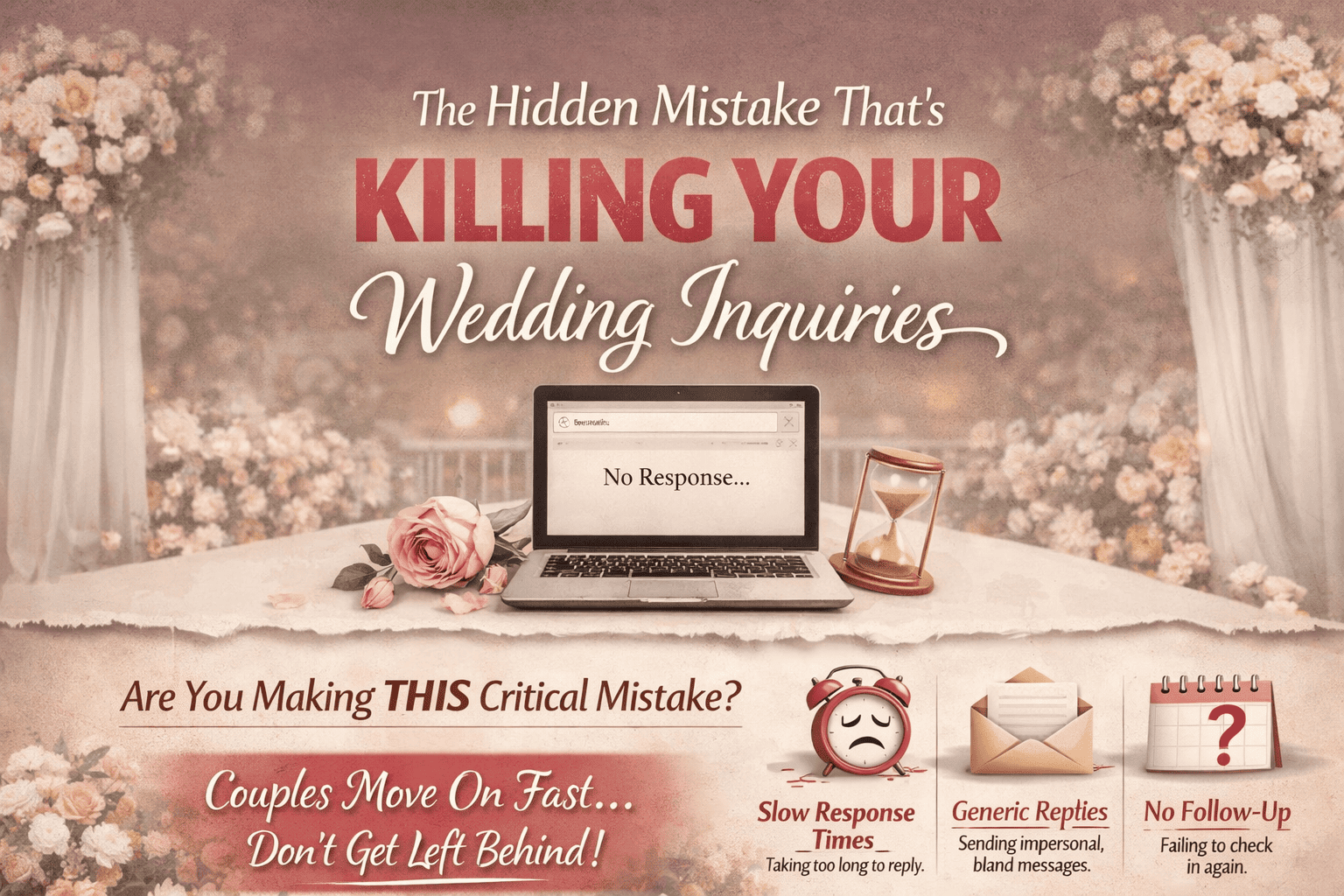
- Written by: admin
- March 18, 2026
Introduction
The hidden mistake killing your wedding inquiries might not be what you expect. Many wedding planners focus on their marketing strategies, website design, and client interactions, but there’s one overlooked mistake that can be silently affecting your business. If you’re struggling to convert leads or your inquiry rate is lower than expected, this hidden mistake could be the reason why potential clients aren’t reaching out.
In this blog post, we’ll dive into the hidden mistake killing your wedding inquiries, explain why it’s happening, and provide actionable steps to fix it. By the end of this article, you’ll have a better understanding of how to attract more inquiries and convert them into paying clients, leading to business growth and success.
Wedding planners often focus on perfecting their marketing strategies, improving their website, and refining their services. But despite all their efforts, they may still find that inquiries aren’t coming in as expected. While it’s easy to blame poor marketing or bad timing, there’s often a hidden mistake that’s silently killing your wedding inquiries. This mistake can have a huge impact on your ability to generate leads and grow your business.
In this blog post, we’ll uncover the hidden mistake that could be preventing potential clients from reaching out. We’ll explain how it affects your wedding planning business and provide actionable solutions that will help you attract more inquiries, convert them into clients, and ultimately grow your wedding planning business.
1. The Mistake: Failing to Provide Clear Calls-to-Action (CTAs)
The hidden mistake that’s killing many wedding planners’ inquiries is the lack of clear calls-to-action (CTAs). Without effective CTAs, your potential clients are left unsure of what to do next, and you risk losing valuable leads.
Why It’s Important:
CTAs guide potential clients: A CTA tells visitors exactly what you want them to do next, whether that’s booking a consultation, requesting more information, or downloading a free guide. Without a CTA, visitors may not know how to take the next step toward becoming clients.
CTAs make it easier to convert leads: A clear and compelling CTA encourages visitors to take immediate action, which increases your chances of converting them into clients.
CTAs give you measurable results: Having a CTA in place helps you track how many people are engaging with your content and taking action, which is critical for understanding the success of your marketing efforts.
How to Fix It:
Be specific and actionable: Use CTAs like “Book Your Free Consultation” or “Get a Customized Wedding Plan” instead of vague phrases like “Learn More.”
Place CTAs prominently: Ensure your CTAs are placed above the fold (on the part of the webpage visible without scrolling) and on every relevant page. For example, your homepage, service pages, and blog posts should all have clear CTAs that lead visitors to take action.
Use persuasive language: Your CTAs should appeal to your potential clients’ emotions. For example, “Let us help you create your dream wedding” is more compelling than “Contact us.”
2. The Mistake: Inconsistent Branding Across Channels
Branding plays a vital role in attracting wedding inquiries. Inconsistent branding—whether on your website, social media, or in your marketing materials—can create confusion and make potential clients question your professionalism. If your branding isn’t cohesive, clients may not feel confident in your ability to manage their wedding.
Why It’s Important:
First impressions matter: Wedding planners are often hired for their sense of style, organization, and attention to detail. Inconsistent branding gives the impression that you might not bring those same qualities to the planning process.
Trust and familiarity: Consistent branding creates trust and makes your business more recognizable. Potential clients want to see a unified, polished image across all touchpoints, from your website to your Instagram profile.
How to Fix It:
Create a unified brand identity: Develop a clear and consistent visual identity that reflects your personality and your wedding planning business. This includes your logo, color scheme, font choices, and the tone of your content.
Be consistent on all platforms: Ensure that your website, social media profiles, email templates, and marketing materials all reflect the same brand image. This consistency will help reinforce your professionalism and credibility.
Show your personality: Wedding planning is a personal service, so let your brand reflect your unique style. Whether you specialize in intimate ceremonies or grand celebrations, your branding should align with the type of weddings you plan.
3. The Mistake: Poor User Experience on Your Website
A common hidden mistake many wedding planners make is providing a poor user experience on their website. Wedding planners often overlook the importance of website usability, mobile optimization, and loading speed, all of which play a huge role in whether potential clients stay on your site long enough to inquire about your services.
Why It’s Important:
First impressions count: Your website is often the first place potential clients interact with your brand. If your site is hard to navigate, slow to load, or not mobile-friendly, visitors will likely leave before ever reaching out.
Mobile optimization: A large percentage of users browse websites on their mobile devices. If your website isn’t optimized for mobile viewing, you could lose out on a significant number of potential clients.
Simple navigation leads to higher conversions: If potential clients can easily find information and navigate your site, they are more likely to trust you and inquire about your services.
How to Fix It:
Optimize your website for mobile: Use a mobile-responsive design to ensure that your site looks good and functions well on smartphones and tablets.
Improve loading speed: Slow websites drive users away. Use tools like Google PageSpeed Insights to identify areas where you can speed up your website.
Simplify navigation: Ensure your site is easy to navigate, with clear categories for your services, portfolio, and contact information. Add a prominent Contact Us button and keep your booking process simple.
Use clear and engaging content: Provide valuable content like wedding planning tips, client testimonials, and portfolio examples. This will encourage visitors to stay on your site longer and explore your services.
4. The Mistake: Not Nurturing Leads Effectively
Another common mistake that wedding planners make is not nurturing leads effectively. When someone inquires about your services, it’s essential to follow up promptly and continue engaging with them until they’re ready to book your services. Many planners make the mistake of sending one email or message and then forgetting about the lead.
Why It’s Important:
Building relationships: Nurturing leads helps build relationships with potential clients and gives you an opportunity to prove your value and expertise.
Increased conversion rates: Leads that are nurtured properly are more likely to convert into clients, as consistent communication builds trust and keeps you top of mind.
Client education: Effective lead nurturing involves educating clients about your services and helping them understand why you’re the right choice for their wedding.
How to Fix It:
Use automated email sequences: Set up automated emails to follow up with leads who inquire about your services. Send them a series of emails that include wedding planning tips, client success stories, and information about your services.
Personalize your follow-ups: Customize your emails to address the client’s specific needs and interests. If a potential client mentions a destination wedding or a particular style, tailor your response to reflect that.
Be timely and consistent: Don’t let leads slip through the cracks. Respond to inquiries within 24 hours, and continue to engage with them over time through personalized emails, social media interaction, or phone calls.
5. The Mistake: Not Using Client Testimonials and Social Proof
Social proof is one of the most powerful tools you can use to attract wedding inquiries. Many wedding planners fail to leverage client testimonials, reviews, and case studies, which can be crucial in convincing potential clients that you’re the right choice for their special day.
Why It’s Important:
Builds credibility: Testimonials and reviews provide social proof that you are trustworthy and capable of delivering on your promises.
Helps potential clients feel more confident: Couples who are planning their wedding often feel uncertain about their choices. Seeing that others have had a positive experience with you can help ease their concerns and encourage them to reach out.
Improves conversions: Client testimonials can serve as powerful calls to action that encourage potential clients to book your services.
How to Fix It:
Showcase testimonials on your website: Include client testimonials on your homepage, service pages, and in a dedicated testimonials section. Include names, photos, and details about the wedding to make the testimonials more authentic.
Add case studies: Highlight a few of your most successful weddings with detailed case studies. Include information on how you helped the couple plan their event and showcase your problem-solving skills.
Encourage clients to leave reviews: After each wedding, ask clients to leave reviews on platforms like Google, Facebook, or wedding-specific sites like The Knot or WeddingWire.
Conclusion
The hidden mistake killing your wedding inquiries is often not something obvious like ineffective marketing or bad timing—it’s the small details that make a big difference, like lack of clear CTAs, inconsistent branding, poor website experience, and ineffective lead nurturing. By addressing these issues, you can significantly improve your chances of attracting more inquiries and converting them into clients.
Make sure your website is optimized for user experience, your branding is consistent across all platforms, and you’re following up effectively with leads. Use social proof, showcase your expertise, and be sure to provide clear calls-to-action on your website and social media. These strategies will not only help you attract more inquiries but also build long-lasting relationships with potential clients.