 hello@betadigitalmarketing.com
 +91 9513999901
- Written by: admin
- March 18, 2026
Introduction
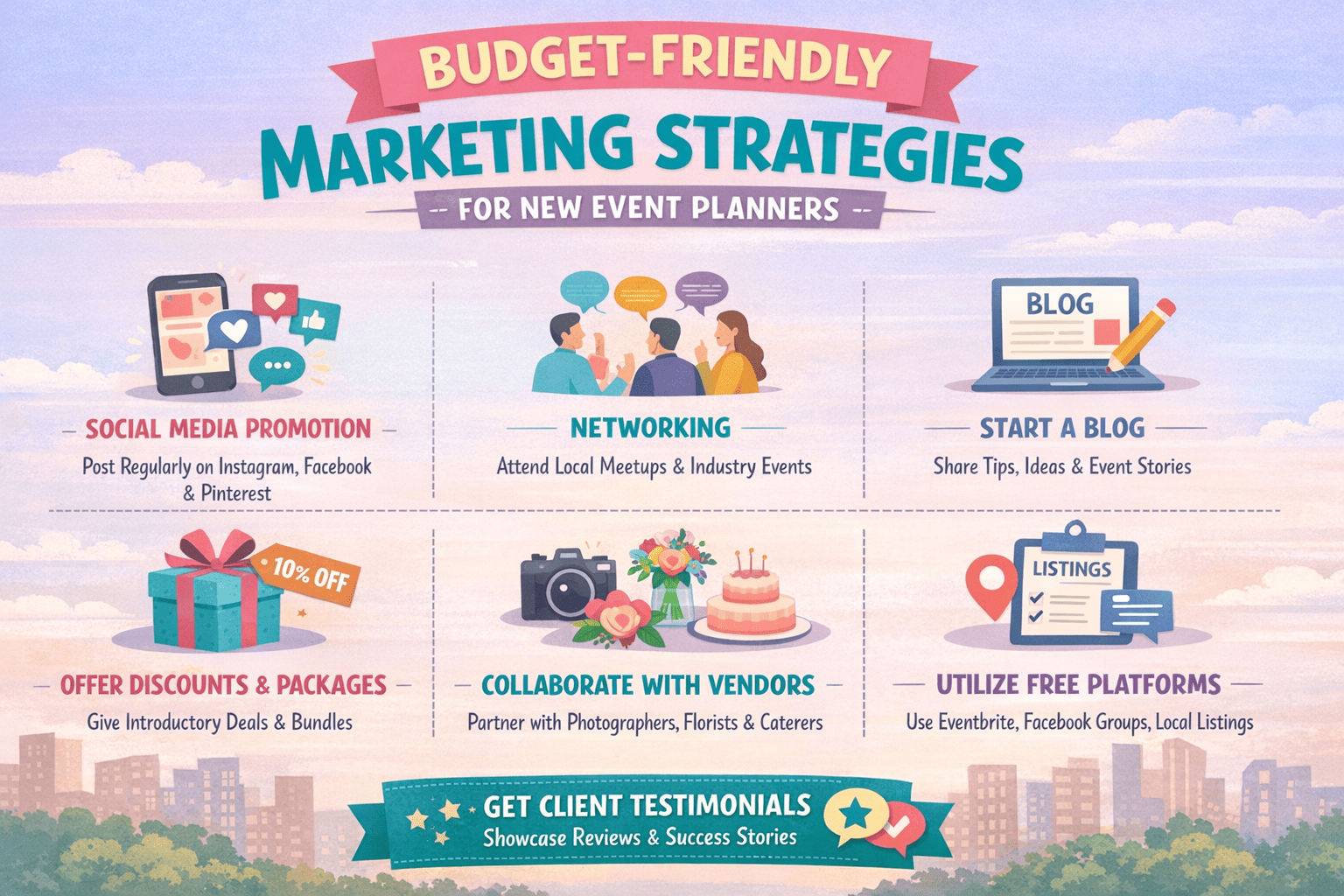
As a new event planner, marketing your services without overspending can feel daunting. Building a brand from the ground up often requires creativity and resourcefulness, especially when your budget is tight. Fortunately, there are several budget-friendly marketing strategies for new event planners that can help you reach your target audience, grow your business, and build a solid reputation in the event planning industry.
In this blog, we’ll explore a variety of low-cost marketing strategies designed to help you stand out in a competitive market. From creating a professional online presence to leveraging word-of-mouth referrals, these strategies will allow you to establish your brand, build trust with potential clients, and grow your event planning business without breaking the bank.
1. Create a Professional Website (Even on a Budget)
In the digital age, having an online presence is a must for any event planner. Your website is often the first point of contact for potential clients, so it’s important to make it count. The good news is, you don’t need a massive budget to create a professional-looking website that showcases your skills and services.
Why It’s Important:
Builds credibility: A well-designed website helps establish your event planning business as legitimate and professional.
Attracts clients: A website serves as a platform to attract clients through search engines, social media, and online referrals.
Provides essential information: It’s a one-stop shop for clients to learn about your services, view your portfolio, and contact you.
Budget Tips for Creating a Website:
Use website builders: Platforms like Wix, WordPress, and Squarespace offer affordable pricing plans and user-friendly templates. You can create a professional-looking website without hiring a web developer.
Keep it simple: Focus on clear navigation, high-quality images, and straightforward content. Your homepage should include key information like your services, portfolio, and a clear call-to-action (CTA) to book your services.
Optimize for mobile: Many clients will visit your site from smartphones, so it’s essential to have a mobile-friendly website. Most website builders have built-in mobile optimization.
Focus on SEO: Use keyword-rich titles, descriptions, and meta tags to improve your website’s SEO. This will help your site rank higher on search engines, driving more organic traffic.
2. Utilize Social Media Platforms Effectively
Social media is a cost-effective marketing tool for new event planners looking to gain exposure. Platforms like Instagram, Facebook, Pinterest, and LinkedIn provide an opportunity to showcase your work, engage with potential clients, and build a community around your brand. Best of all, most social media platforms are free to use!
Why It’s Important:
Wide reach: Social media platforms offer access to millions of users, many of whom are actively searching for event planning services.
Visual appeal: Event planning is a highly visual industry, and social media allows you to showcase stunning images of past events.
Engagement and community building: Social media helps you engage with your audience in real-time and build relationships with potential clients.
Budget Tips for Social Media Marketing:
Focus on visual platforms: Instagram, Pinterest, and Facebook are great platforms for showcasing photos and videos of your events. These platforms are particularly useful for wedding planners and event designers, as they allow you to visually display your creativity.
Post consistently: Regularly post updates, event photos, behind-the-scenes moments, and client testimonials to keep your followers engaged. Use content calendars to schedule posts and ensure consistency.
Leverage hashtags: Hashtags help increase the visibility of your posts. Use popular event planning hashtags like #EventPlanner, #WeddingPlanner, and #PartyPlanning to reach a broader audience.
Engage with your audience: Respond to comments, messages, and tags. Engaging with followers helps build a loyal community and strengthens your relationship with potential clients.
Run paid ads: While organic social media growth is valuable, a small investment in Facebook or Instagram ads can help you reach a targeted audience and increase visibility.
3. Network Locally (In-Person and Online)
Networking is one of the most effective and budget-friendly marketing strategies for new event planners. Building strong relationships with local vendors, venues, and clients can lead to valuable word-of-mouth referrals, partnerships, and collaborations.
Why It’s Important:
Referrals: Building a network of event-related professionals can generate word-of-mouth referrals that are often more valuable than any paid advertisement.
Opportunities for collaboration: Collaborating with other vendors can lead to co-marketing opportunities, like joint promotions or bundled packages.
Establish local authority: Networking locally helps establish your business as an authority in the community.
Budget Tips for Networking:
Attend local events and expos: Many cities host bridal shows, event planning expos, and business networking events. Attend these events to meet potential clients and other vendors.
Join local business organizations: Becoming a member of a local Chamber of Commerce or business association can open up networking opportunities with other business owners.
Leverage online networking: Use LinkedIn to connect with other event professionals and potential clients. Join event planning groups and engage in conversations to position yourself as an expert.
Partner with local vendors: Form alliances with florists, photographers, caterers, and other vendors to cross-promote each other’s services. This can help both parties reach new audiences.
4. Leverage Email Marketing
Blogging is a powerful content marketing tool that can help you establish authority and drive organic traffic to your website. Real weddings provide a wealth of content ideas for blog posts that showcase your expertise while helping potential clients with their wedding planning.
Why Blog Content is Effective:
It provides helpful, informative content that attracts visitors searching for wedding planning advice.
Blog posts that showcase your real weddings can rank on Google, making your website more visible to potential clients.
Blogging helps you build a relationship with your audience by offering value and insights.
How to Use Real Weddings in Blog Content:
Write detailed case studies: After a wedding, create a blog post that takes readers through the entire process. Discuss challenges you faced, how you solved them, and the final results. Include photos and client testimonials to make the post more engaging.
Share wedding planning tips: Use real weddings to create blog posts with practical advice for couples. For example, you could write a post on “How to Plan a Rustic Wedding” using photos and details from a wedding you’ve already planned.
Create themed wedding inspiration posts: Use real weddings as inspiration for blog posts based on themes, colors, or trends. For example, “10 Stunning Outdoor Wedding Ideas” or “Top Trends for Luxury Weddings in 2026.”
5. Ask for Referrals and Client Testimonials
One of the best ways to market your services on a budget is by asking satisfied clients for referrals and testimonials. Word-of-mouth marketing is incredibly powerful, especially in the event planning industry, where trust and reputation are paramount.
Why It’s Important:
Builds credibility: Testimonials and referrals provide social proof, showing potential clients that others trust and appreciate your services.
Cost-effective: Referrals and testimonials don’t require a financial investment, but they can yield high returns in terms of client bookings.
Encourages trust: Prospective clients are more likely to hire a planner who comes highly recommended by friends, family, or other vendors.
Budget Tips for Referrals and Testimonials:
Request testimonials: After every event, ask your clients for feedback and permission to use their testimonials on your website and marketing materials.
Offer incentives: Provide discounts or special offers to clients who refer new business to you. For example, offer a discount on future events for each successful referral.
Feature testimonials on your website and social media: Share client testimonials across your website, social media, and email marketing campaigns to showcase your success stories.
6. Collaborate with Other Event Professionals
Collaborating with other event professionals, such as photographers, florists, and caterers, can be a great way to market your services without spending a lot of money. Partnering with established vendors can also enhance your credibility and expand your reach.
Why It’s Important:
Access to a wider audience: By collaborating with other vendors, you can tap into their networks and reach new clients.
Shared resources: Pooling resources with other vendors for joint events or promotions can save you money while still getting exposure.
Builds credibility: Being associated with trusted vendors helps position you as a credible and experienced event planner.
Budget Tips for Collaborations:
Cross-promote services: Tag vendors in your social media posts, feature their work on your website, and ask them to do the same for you. This helps increase visibility for both parties.
Collaborate on content: Write blog posts, create joint social media posts, or host webinars together to offer value to your audiences.
Offer bundled services: Partner with other vendors to create bundled packages, such as “Wedding Planning + Photography” or “Event Coordination + Floral Design,” which can attract clients looking for one-stop solutions.
Conclusion
Marketing your event planning business on a budget is entirely possible with the right strategies. By utilizing the tips outlined above—such as building a professional website, engaging with clients on social media, and leveraging referrals—you can effectively grow your event planning business without spending a fortune.
As a new event planner, it’s important to focus on building relationships, providing value to your clients, and positioning yourself as an expert in your niche. With consistent effort and creativity, you can establish a strong online presence and attract a steady stream of clients, even with a limited marketing budget.