 hello@betadigitalmarketing.com
 +91 9513999901
- Written by: admin
- January 22, 2026
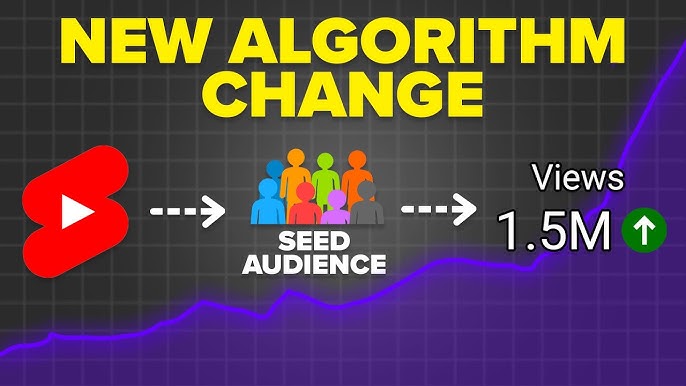
YouTube Shorts Algorithm Shift: Is Fresh Content Beating Evergreen Now?
Something weird has been happening with YouTube Shorts, and a lot of creators felt it before they could explain it.
If you post Shorts, especially if you run a big channel or manage content for brands, you might have noticed this quiet drop-off. Videos that used to keep pulling views for months just… stop. Not slow down. Stop. You open analytics after about a month and it is just a flat line staring back at you. No climb, no dip, nothing. Like the video hit an invisible wall and stopped moving.
At first, it felt like a coincidence. Then people started comparing notes.
And that is where things got uncomfortable.
What Creators Started Noticing (Before YouTube Said Anything)
Around September 2025, analysts who track MrBeast-level channels started seeing a pattern. Shorts older than roughly 28 to 30 days were getting drastically fewer impressions. Not fewer clicks. Not lower retention. Fewer impressions. Like YouTube just stopped showing them.
YouTube, for the record, has said nothing. No blog post. No creator update. No vague “we are testing something” tweet. Just silence.
This might sound confusing, but the key thing is this: the content itself did not suddenly get worse. Audience behavior did not suddenly change. The distribution did.
The Data That Sparked the Panic
Retention analyst Mario Joos dug into this properly. Not small channels. We are talking about creators pulling anywhere from 100 million to over a billion views per month.
Before September, evergreen Shorts behaved how you would expect. If a Short had strong retention, good watch time, and people actually liked it, it would keep getting pushed. Not forever, but long enough to make the effort worth it.
After September, the pattern changed.
Around that 28 to 30 day point, things just fell off a cliff. Not a slow decline. Not a gentle taper. One day the impressions were there, and then suddenly… nothing. Flat. Like someone turned off a switch. Just flattened.
And here is the part that matters: this did not hit one niche or one style. It hit almost everyone at the top, uniformly.
That is usually a sign of an algorithmic rule, not random chance.
Why Creators Are Angry (And Honestly, Fair Enough)
Tim Chesney, who has over 2 billion lifetime views, put it bluntly. Evergreen videos simply tanked. In his words, it makes investing in quality feel irrelevant.
That sounds dramatic, but think about the old Shorts model for a second.
You made one great Short. You obsessed over the hook. You refined the pacing. You tested captions. If it worked, it could bring in views, subscribers, and revenue for months. Sometimes longer.
Now the new reality feels very different.
You make a great Short. It performs. And then, about a month later, it is basically dead.
Same content. Same performance signals. No distribution.
That changes the math for creators in a big way.
The Business Shift No One Asked For
Before this shift, Shorts behaved like an asset. You built a library. Over time, that library compounded. One good idea could pay off again and again.
Now it feels more like a treadmill.
Instead of “build once, earn forever,” it is starting to feel like “publish daily or disappear.”
Quality still matters, but speed matters more than it used to. Volume starts winning over polish. Not because creators want it that way, but because the system rewards freshness over depth.
If you are a solo creator, that is exhausting. If you are a brand, it changes budgeting and expectations fast.
Why This Feels Bigger Than Just YouTube
Here is the uncomfortable parallel. This shift looks a lot like what happened in SEO years ago.
Authority used to carry content for a long time. A strong page could rank for years with minor updates. Then freshness started creeping in. Updates mattered more. Publishing cadence started to matter more.
Now we are seeing a similar thing in short-form video.
Freshness is winning. Not because old content is bad, but because platforms want constant activity.
And to be honest, that benefits the platform more than it benefits creators.
What Marketers and Creators Actually Need to Do Now
First, you need to confirm this is happening to you. Do not assume. Go into your analytics and look at Shorts older than 30 days. Compare August performance to October. Look at impressions, not just views.
If you see that flat line, you are not alone.
Second, you probably need to adjust cadence. Not panic-post, but shift expectations. Weekly uploads might not cut it anymore for Shorts-only strategies. Quality still matters, but the window to benefit from it is shorter.
Third, it might be time to stop treating YouTube Shorts as your only short-form bet. TikTok and Instagram Reels still have more evergreen behavior, at least for now. Think of them as a hedge, not a replacement.
Fourth, long-form content still looks stable. The algorithm there does not seem to have changed in the same way. If you already have long videos, they might quietly be doing more work than your Shorts.
The Most Frustrating Part
Creators did not learn this from YouTube.
They learned it by playing analytics detective. Comparing screenshots. Sharing graphs privately. Connecting dots in group chats.
YouTube’s response so far has been… nothing.
And that silence is what makes people nervous. When platforms change rules without explaining them, creators feel like they are building on sand.
So, Is Fresh Really Beating Evergreen?
Right now, yes. At least on YouTube Shorts.
That does not mean evergreen thinking is dead. It just means evergreen no longer means “this will work for months on YouTube.” It might mean “this works well for 30 days, then lives on other platforms.”
That shift is subtle, but it matters.
Check your data. Do not rely on vibes. If the numbers confirm it, adapt. Because pretending the old model still works is the fastest way to get buried.